Monarch dance

Earlier this year I watched as one of the first monarch butterflies circled the milkweed/swan plant below our deck. This time I grabbed a pencil and traced her flow on paper, intrigued at her mysterious path of many careful circuits. The drawing ends up a puzzling maze, as if meant to confuse. My notes read she spends minutes circling and making approaches to the plant, swooping past pumpkins, the mustard seed, the raspberries, the snowball tree, diverting attention? Perhaps checking it’s safe, scenting? It’s a dizzying energetic dance, never still. I trace the lines over and over trying to follow the complicated passage.

Continue reading “Monarch dance”

Mothing

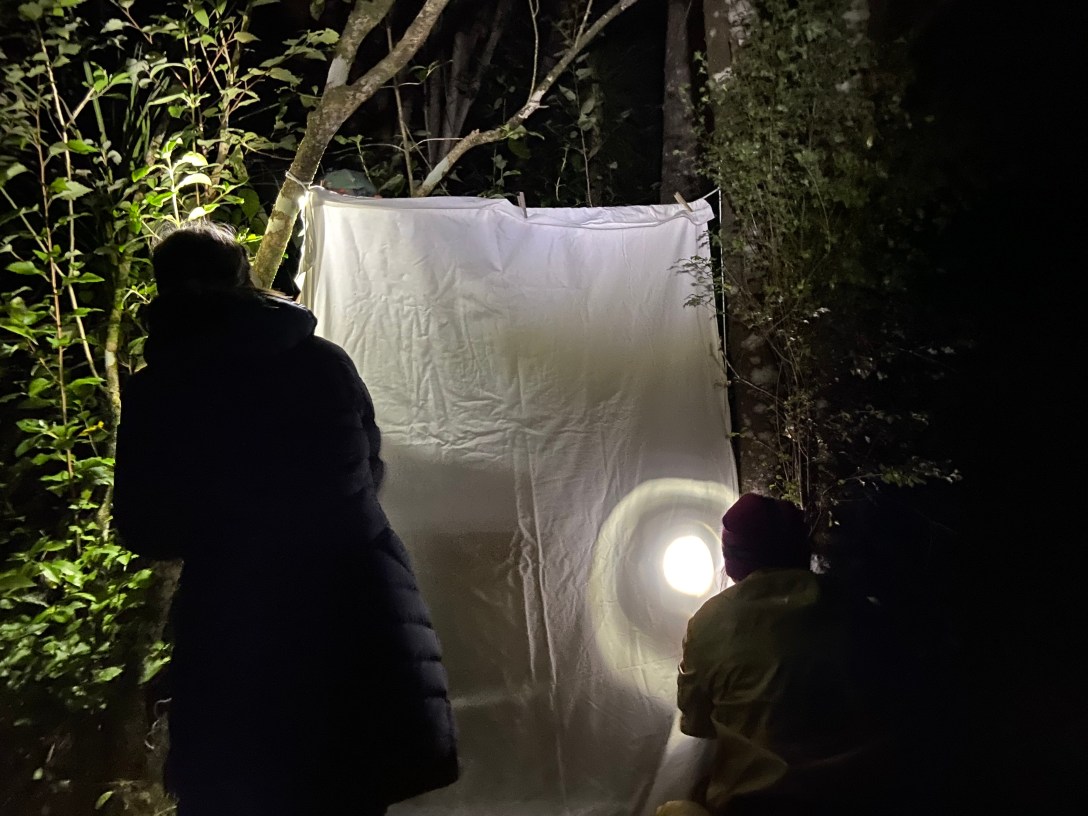
If you see torches flashing in the bush this Saturday night, you’ll know it’s just us!”  I’d emailed nearby neighbours to let them know a small group of us were going down the Carvel Walkway to discover what nocturnal moth neighbours we might have, attracting them to us with a home-made light trap.

Darkness descended around 8.30pm, our cue to head down to a spot in the bush, just beyond streetlights and glows from home windows. And if anyone was looking from those windows as we walked past they may well have fallen about laughing. Fey had jokingly made us bibs titled moth count supervisor and moth count interns to wear over our rain jackets and over-trousers. And combined with flashing headlights strapped to beanies our rather bizarre looking convoy marched down the road. I really wasn’t sure how this experiment would go.

Continue reading “Mothing”

Seeds, winds, circlings

Autumn equinoctial winds whip through neighbourhood lanes. It’s a circling back to this time last year when I began consciously noticing and photographing what’s happening with insect pollinators and other more-than-humans living here.

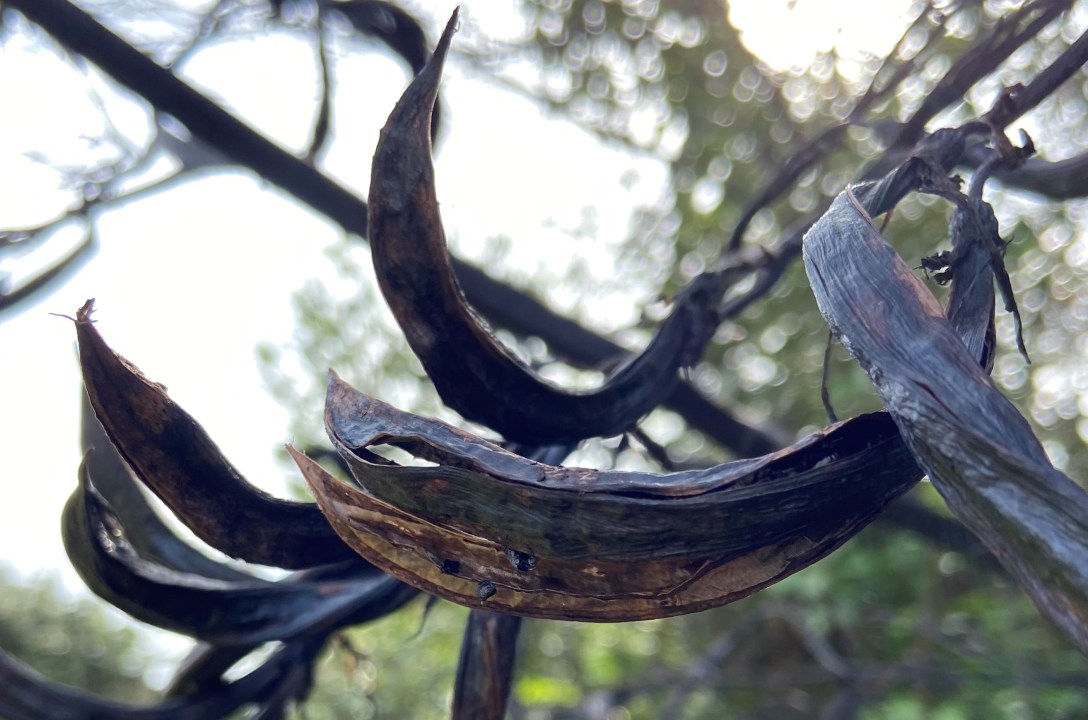
Hopping chaffinches laboriously harvest the oily black seeds spinning out of cracked flax pods. And the wax eyes have arrived back in the hebes, picking at a potpouri of seed heads. Swollen fruit and berries – from flowers fertilised earlier by pollinators – begin to release and die. A profusion of their seeds scatter out. Capsules of future life. The valley reminds me of the repeating pulses, patterns and cycles. Old friends again.

Continue reading “Seeds, winds, circlings”

Out of whack

I feel out of whack. Contemplating powerlessness and unpredictability in the wake of the recent climate floods. The bubble of societal comfort burst overnight. Does awful natural force ironically provide sight lines to sensing imbalance?

On a vastly different scale other things tug in the same direction. The other day we visited Mike our local beekeeper at his honey stand in Brown’s Bay. There’s less manuka honey than normal for this time. The manuka flowering season was shorter this year, even the kanuka was over in a few days due to the wet and wind. That explains why I never saw the usual white dusting, like icing, across the valley. And there’s less honeycomb too – the bees have been eating more of it to sustain themselves over the damp summer.

Female monarch butterflies have only just started to visit my swan plants in earnest in the past two weeks to lay small pale yellow eggs. It seems late. They are also sensitive to temperature. Last year was a disaster. Hundreds of caterpillars stripped my few small plants within days, then humped off starving, in the hopes of finding food elsewhere, or to die. This year I got a head start, planted early (late winter) and now have lush full-grown plants. But not many caterpillars. Most live for a day or so then disappear before they mature. They are probably being taken by the many wasps around that hunt for protein to feed their queens.

Impotence has crept into my haphazard attempts to support the local butterfly population.

After the cyclone

When the tail end of Cyclone Gabrielle spun away from us in Pauatahanui things became eerily still. I had an intense urge to climb up somewhere, perhaps to try and make sense of the climate tragedy that just happened further north. At the top of Kahu Road the rain and wind departed and the sky started to clear. The only sound was the intense ringing of cicadas, as if shouting out the shock that vibrated through our collective psyche.  

Continue reading “After the cyclone”

Crimson language

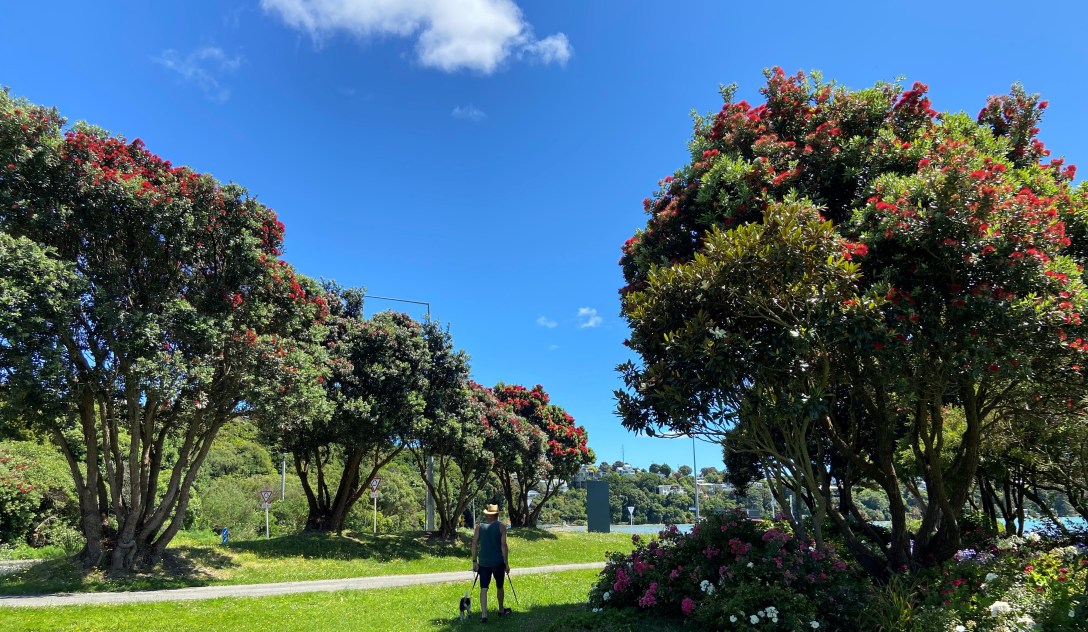
Like life blood through veins, pohutukawa blossoms course through the neighbourhood streets. It’s an intriguing pattern that pulses from tree to tree, as if by relay. First some, followed by others. Could there be something more than geography and climate that’s influencing this pattern? The trees in this community are close and experience the same weather.

Mike, a local, from Harris Road Honey, once told me that when the pohutukawa flower the honeybees will eat little else. I notice that as each tree blossoms the frenzied bees move in, undertaking what looks like an exhaustive pollination/eating session. How does the alliance and kinship language transmit between tree and pollinators to maximise their relationship? Perhaps by staggering their flowering, the trees share the attention of the local pollinators rather than scattering the bees’ focus across all trees at the same time. Potentially it creates a more comprehensive pollination for each pohutukawa and lengthens the their pollination/food period. A win win for tree and bee.

Continue reading “Crimson language”

Pinpoints of energy

I’m underneath a large pohutukawa, my shoulder blades resting in earth, looking up at the fiery ring of blossoms etched out by sky and sun.  

Light catches translucent wings of tens of hundreds of bees, and other flying insects attracted to the blaze. Pinpoints of energy, life patterning through air.

I’m stuck on the ground.  

Feet sense

Tim and I stopped at the shore of Browns Bay by the inlet and watched schools of mullet bubbling and swirling beneath the glinting surface.

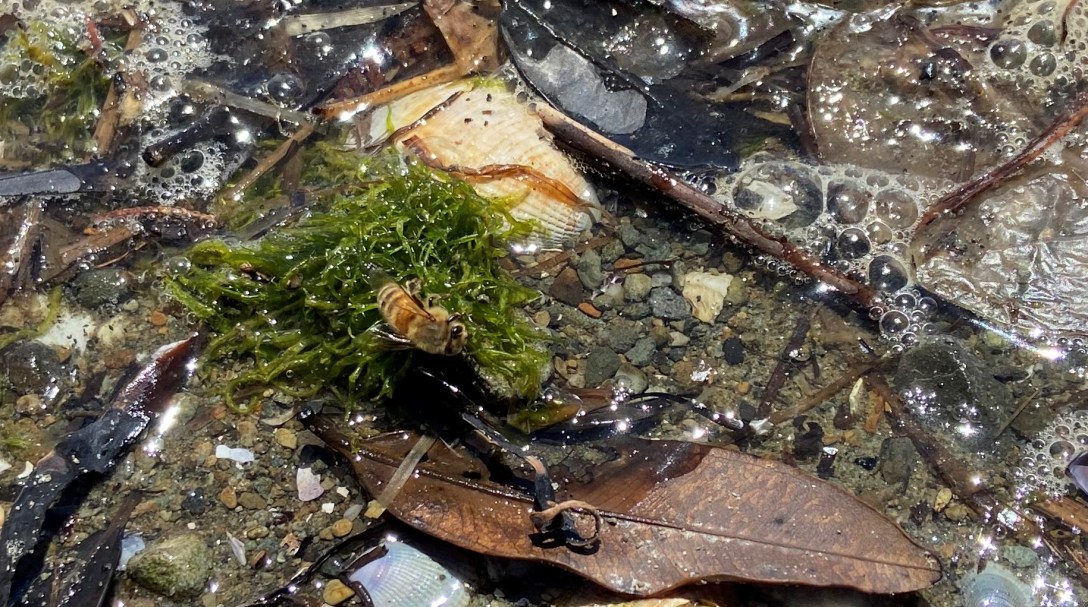
By the water’s edge I watched several honeybees hovering over the sand close to my feet. They were landing on small clumps of wet, green seaweed and walking over it – and tasting it! They weren’t interested in the dry seaweed, only the stuff being lapped by the small waves. What would the seaweed be providing them? Perhaps they were thirsty. I was so intrigued that I hoped online and read that honeybees have salt-sensing feet! They prefer slightly salted water and dirty water, which provide additional minerals and vitamins needed for their metabolism.  Some honey producers feed seaweed to their bee colonies during lean times and in an effort to counter bee diseases and colony collapses.

Stephanie Pappas, a contributing writer for Live Science, writes about the bees’ salt sensing feet

Following fragrance and frenzy

We are slowly tilting towards the sun’s warmth. Our neighbourhood is flushed with colour and fragrance. A frenzied relationship between flower-insect-bird is taking place: pollen movement and fertilisation for the plant and pollen protein and nectar energy for the pollinating insects and birds. The wild energy is understandable. Life is impermanent. The exchange is momentary.  

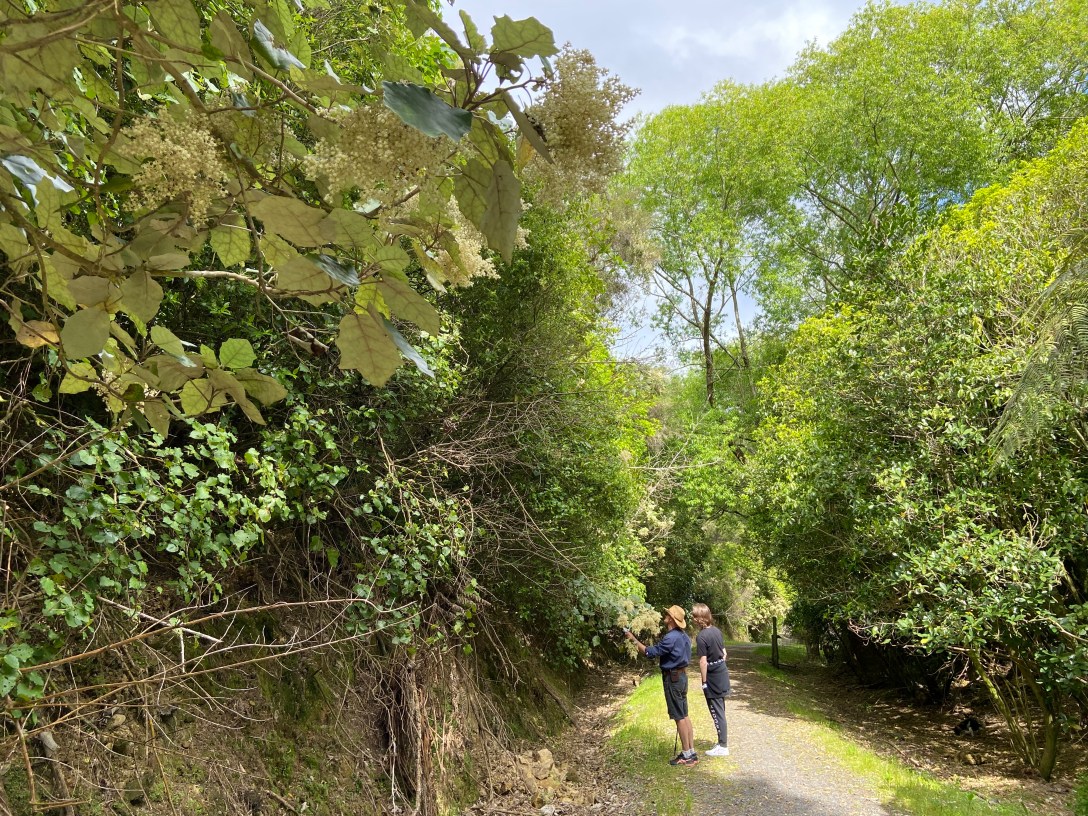
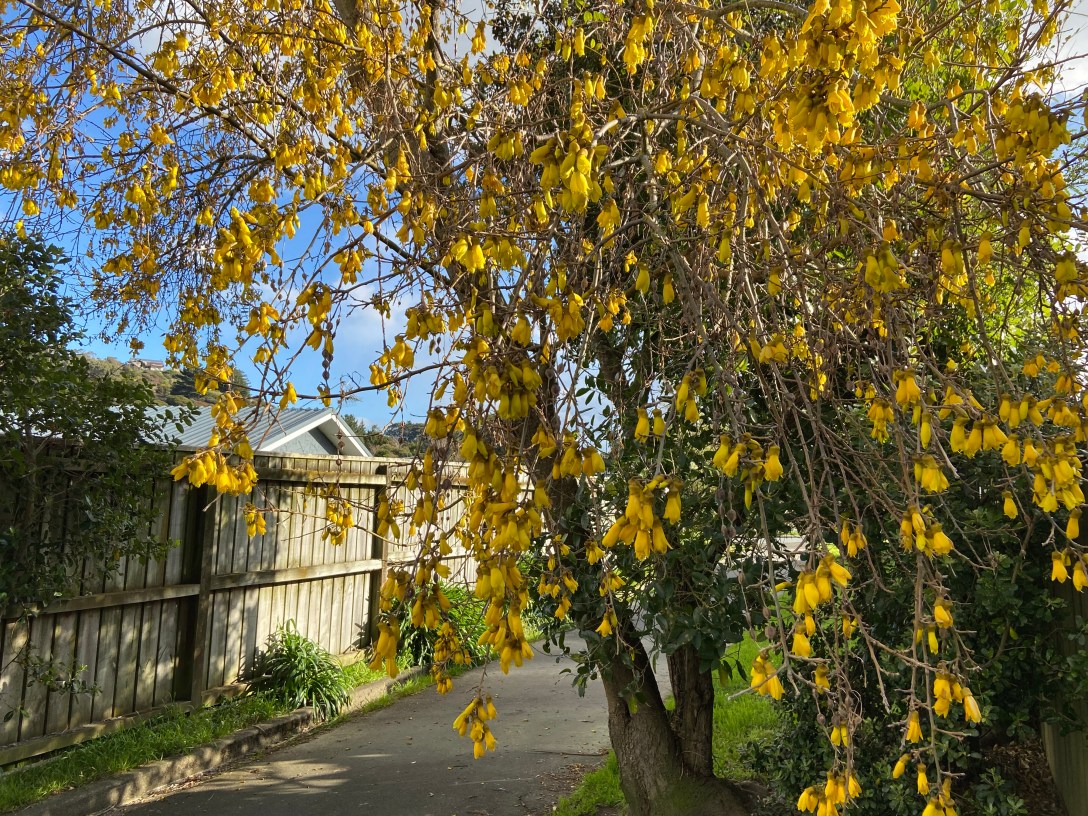
Ornamental cherry, lavender, magnolia, camelia, and rhododendron were the first noticeable signalers on berms, leaning over private fences. Now it’s the dreamy scents from the less obvious flowers of our native trees which are luring me and the pollinators. There’s the small cream, white or pale green florets of tarata (lemonwood), rangiora, tī kōuka/cabbage tree, pāpāuma/kāpuka/griselinia and the dark purple/red of kōhūhū, karo and the stunning spiky orbs of rewarewa. Frustratingly I can’t follow everywhere the bees, moths, beetles and flies go, up high or deep into bushes or in other people’s gardens.

Continue reading “Following fragrance and frenzy”