She is tattered, at the end of her short life. Her body shakes and shivers. I tiptoe closer but she’s too preoccupied to bother with me. Slowly she clasps a bunch of leaves with thin black legs and draws her abdomen up into a sickle shape, with the tip pressing under a leaf depositing a tiny pale-yellow egg. She repeats this process several times resting in between, vibrating. It’s a big effort and I marvel at her energy and determination. At her peak she may have been laying between 300-400 eggs at a rate of 40 eggs a day! Now on her last legs she is perhaps the last of the female monarchs that will visit our swan plant/milkweed. There is a slim chance her offspring might slowly pupate through winter and emerge as new adults in spring. And there are other reminders that this is a time, a season, of dying and release.
Continue reading “Last dance”Tag: rhythms
First fruits
Picking ripening apples and plums on garden trees, foraging for blackberries in gullies, watching swelling pumpkins and birds eating karaka and karamu berries. Today I’m acknowledging all the unpaid work of our pollinator neighbours which now bears juicy fruit under the midsummer heat. Food for all of us – humans and more-than-humans.
Artist, writer and psychotherapist Juliet Batten’s calls this time ‘First Fruits’ – Te Waru (Māori) Lugnasad (Celtic) Lammas (Christian). It celebrates early harvest time and is one of eight seasonal markers based on pre-Christian nature-based festivals, brought into rhythm with Aotearoa’s southern seasons and into a relationship with practices and knowledge of Te Ao Māori.
Crimson language
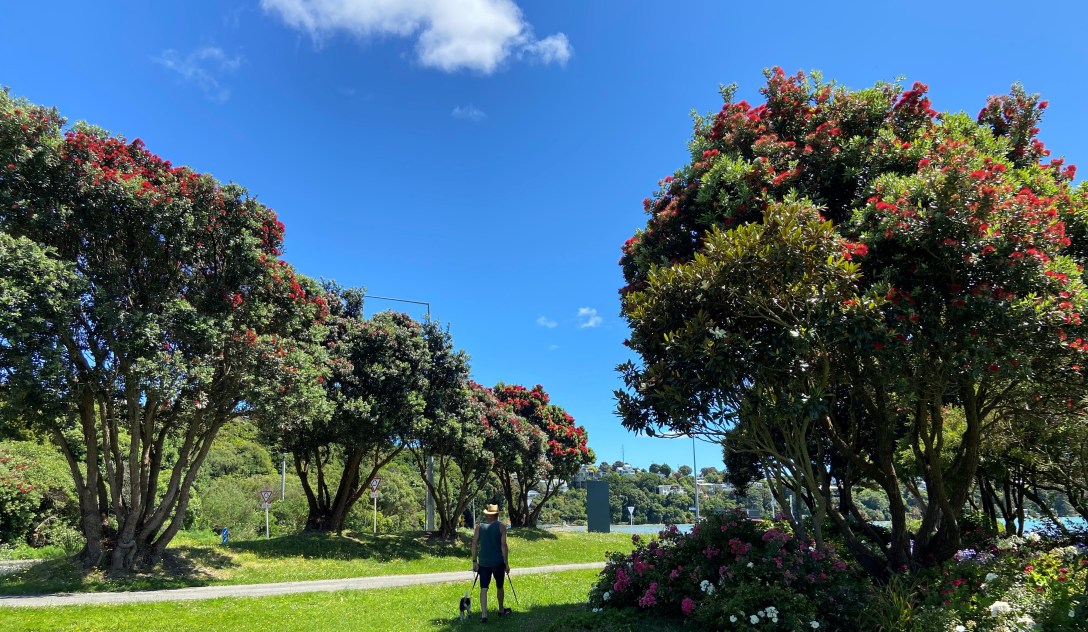
Like life blood through veins, pohutukawa blossoms course through the neighbourhood streets. It’s an intriguing pattern that pulses from tree to tree, as if by relay. First some, followed by others. Could there be something more than geography and climate that’s influencing this pattern? The trees in this community are close and experience the same weather.
Mike, a local, from Harris Road Honey, once told me that when the pohutukawa flower the honeybees will eat little else. I notice that as each tree blossoms the frenzied bees move in, undertaking what looks like an exhaustive pollination/eating session. How does the alliance and kinship language transmit between tree and pollinators to maximise their relationship? Perhaps by staggering their flowering, the trees share the attention of the local pollinators rather than scattering the bees’ focus across all trees at the same time. Potentially it creates a more comprehensive pollination for each pohutukawa and lengthens the their pollination/food period. A win win for tree and bee.
Continue reading “Crimson language”Following fragrance and frenzy
We are slowly tilting towards the sun’s warmth. Our neighbourhood is flushed with colour and fragrance. A frenzied relationship between flower-insect-bird is taking place: pollen movement and fertilisation for the plant and pollen protein and nectar energy for the pollinating insects and birds. The wild energy is understandable. Life is impermanent. The exchange is momentary.
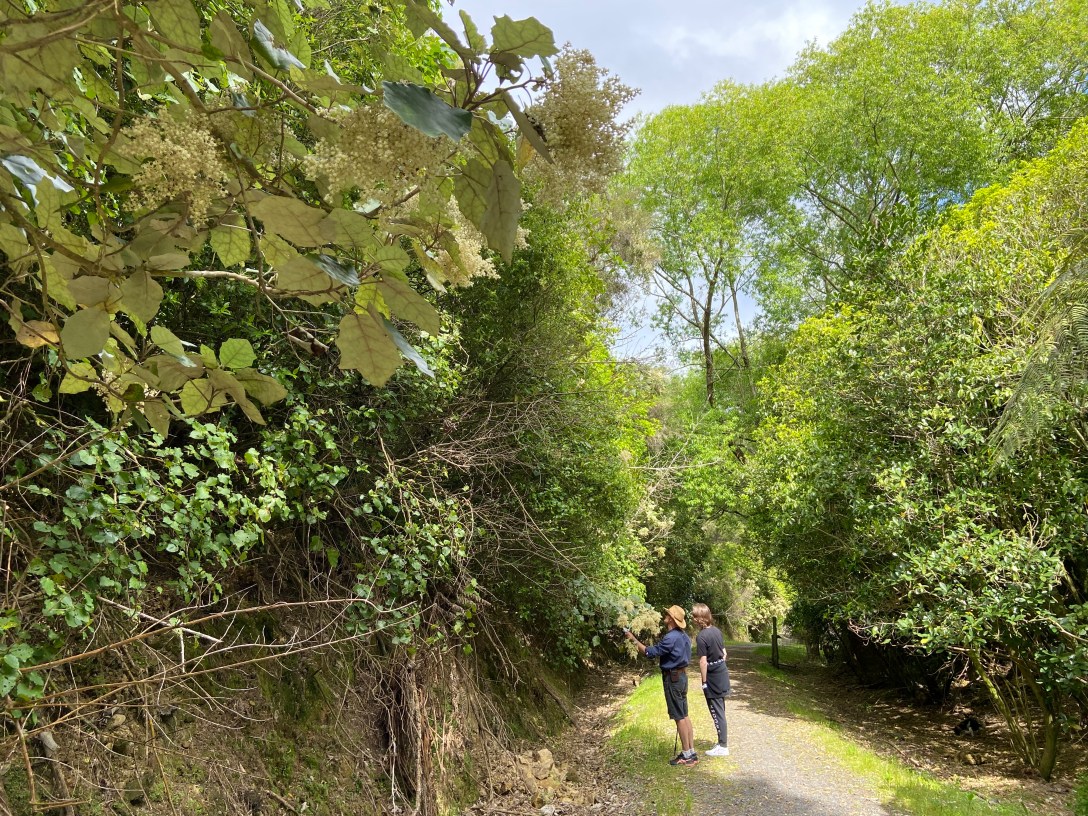
Ornamental cherry, lavender, magnolia, camelia, and rhododendron were the first noticeable signalers on berms, leaning over private fences. Now it’s the dreamy scents from the less obvious flowers of our native trees which are luring me and the pollinators. There’s the small cream, white or pale green florets of tarata (lemonwood), rangiora, tī kōuka/cabbage tree, pāpāuma/kāpuka/griselinia and the dark purple/red of kōhūhū, karo and the stunning spiky orbs of rewarewa. Frustratingly I can’t follow everywhere the bees, moths, beetles and flies go, up high or deep into bushes or in other people’s gardens.
Continue reading “Following fragrance and frenzy”Kōwhai calling
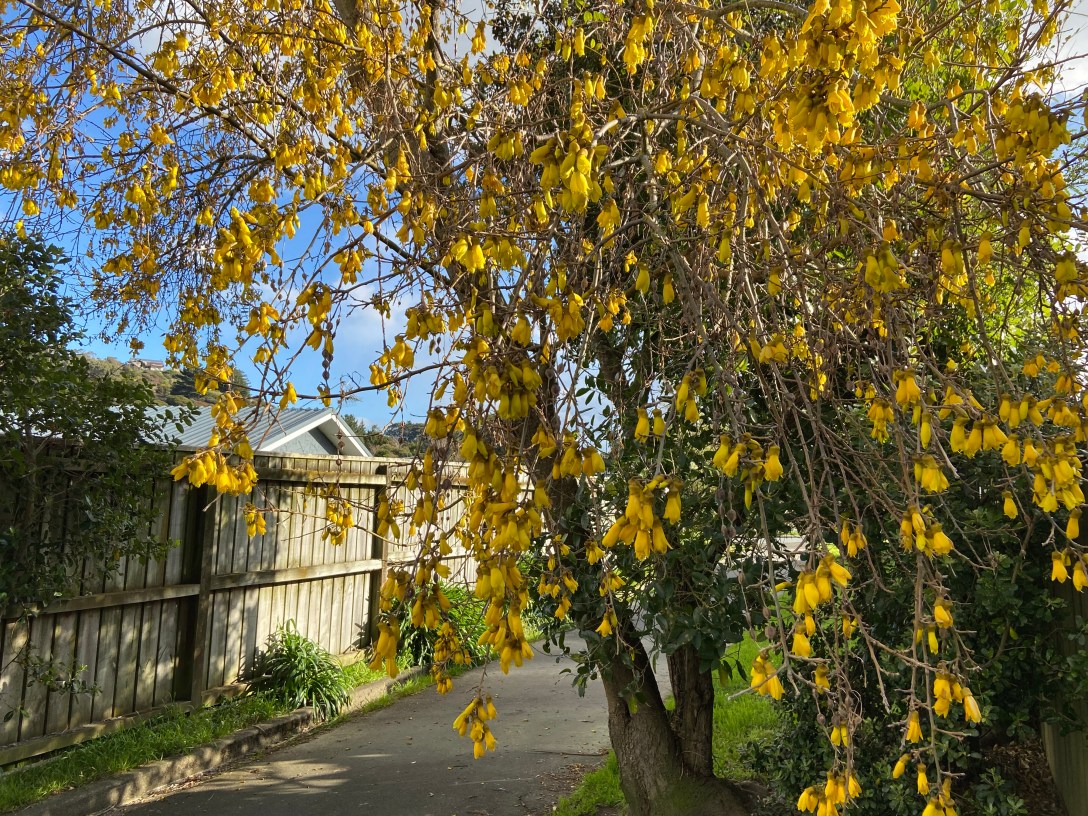
blazes of gold summoning across the commons tui dive and sup small sticky boots wedge inside deeper than I can follow


Moments in Warmth
I think I’m becoming obsessed with the temperature gauge as the weather flip flops between extremes. No sooner has a cold southerly snap arrived than it vanishes, followed by sudden and often intense heat. The other day it climbed to 17C in the shade and, for a time, the sun strike on our deck was 32C. Too hot to sit there! We heard on the radio that Japan had recorded its hottest June temperature ever – 40.2C. But the northern hemisphere is not even into its proper summer yet!
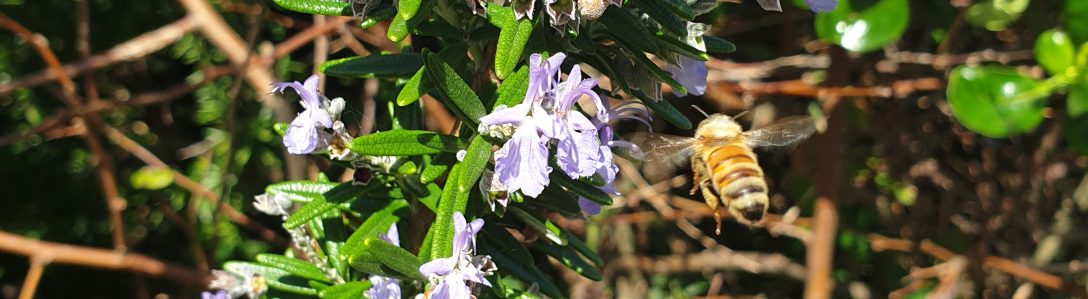
When the air temperature climbs I come across moments of frenzied insect activity on some of my walks. It seems to be the exotic plants they are dipping into such as flowering bottlebrush, dandelions, gorse, lavender, rosemary, buttercups, tree lucerne and nightshade, plus some natives including the odd manuka bush and hebes. What would they forage on in winter if it wasn’t for the introduced plants – some of them considered weeds.
Continue reading “Moments in Warmth”