How to figure my way into 2024 in world that seems ever more uninhabitable? 2023 was the hottest year ever. Headlines scream this year will be worse. Devastating floods and fires are likely to repeat. Wars rage unchecked. At the same time my mailbox reminds me of work deadlines. I’m paralyzed by the discord of this – “there is a lonely absurdity in the idea of racing against the clock at the end of time” writes Jenny Odell in Saving Time: Discovering a life beyond the clock.
Continue reading “Champion for the Unloved”Tag: pollination
First fruits
Picking ripening apples and plums on garden trees, foraging for blackberries in gullies, watching swelling pumpkins and birds eating karaka and karamu berries. Today I’m acknowledging all the unpaid work of our pollinator neighbours which now bears juicy fruit under the midsummer heat. Food for all of us – humans and more-than-humans.
Artist, writer and psychotherapist Juliet Batten’s calls this time ‘First Fruits’ – Te Waru (Māori) Lugnasad (Celtic) Lammas (Christian). It celebrates early harvest time and is one of eight seasonal markers based on pre-Christian nature-based festivals, brought into rhythm with Aotearoa’s southern seasons and into a relationship with practices and knowledge of Te Ao Māori.
Crimson language
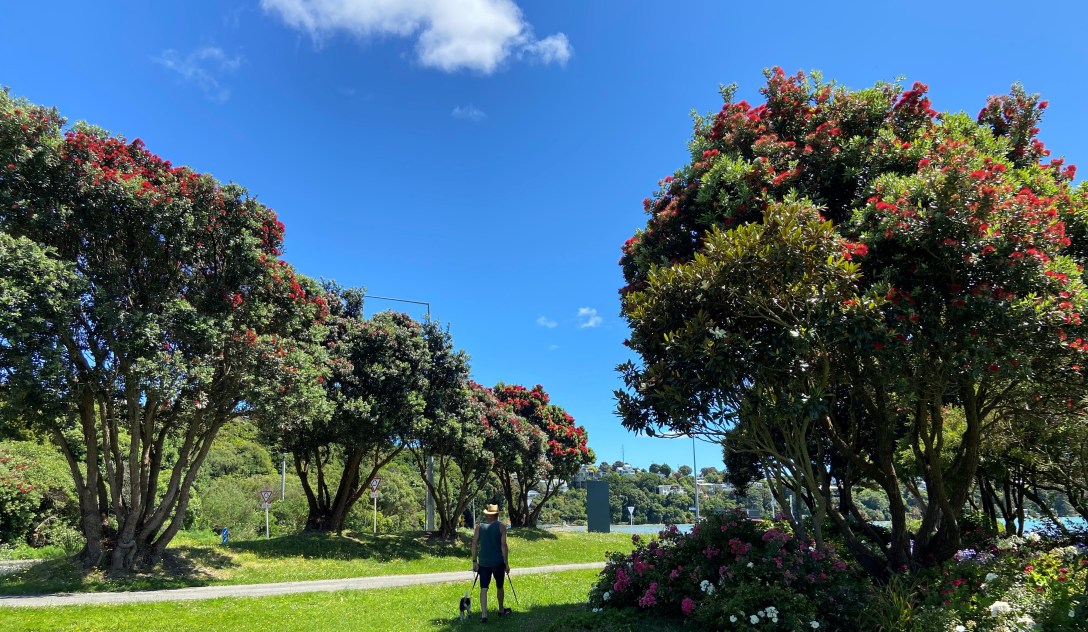
Like life blood through veins, pohutukawa blossoms course through the neighbourhood streets. It’s an intriguing pattern that pulses from tree to tree, as if by relay. First some, followed by others. Could there be something more than geography and climate that’s influencing this pattern? The trees in this community are close and experience the same weather.
Mike, a local, from Harris Road Honey, once told me that when the pohutukawa flower the honeybees will eat little else. I notice that as each tree blossoms the frenzied bees move in, undertaking what looks like an exhaustive pollination/eating session. How does the alliance and kinship language transmit between tree and pollinators to maximise their relationship? Perhaps by staggering their flowering, the trees share the attention of the local pollinators rather than scattering the bees’ focus across all trees at the same time. Potentially it creates a more comprehensive pollination for each pohutukawa and lengthens the their pollination/food period. A win win for tree and bee.
Continue reading “Crimson language”Departures
Some of the neighbours have gone suddenly, without word. I can’t say I really knew them well. They lived halfway down Postgate Drive and I stopped by to say hello now and again. I had always admired their intricate home which took ages to build. They were a secretive lot though. Some said they belonged to a ‘Secret Service’.
I learned that night-time was their thing. The younger members ate remarkable amounts of fast food, while the adults, who had been through life changing events, were attracted to visiting others for drinks and snacks. Though no one seems sure of who they were visiting exactly. Except it was a life-giving exchange for both.
Continue reading “Departures”Following fragrance and frenzy
We are slowly tilting towards the sun’s warmth. Our neighbourhood is flushed with colour and fragrance. A frenzied relationship between flower-insect-bird is taking place: pollen movement and fertilisation for the plant and pollen protein and nectar energy for the pollinating insects and birds. The wild energy is understandable. Life is impermanent. The exchange is momentary.
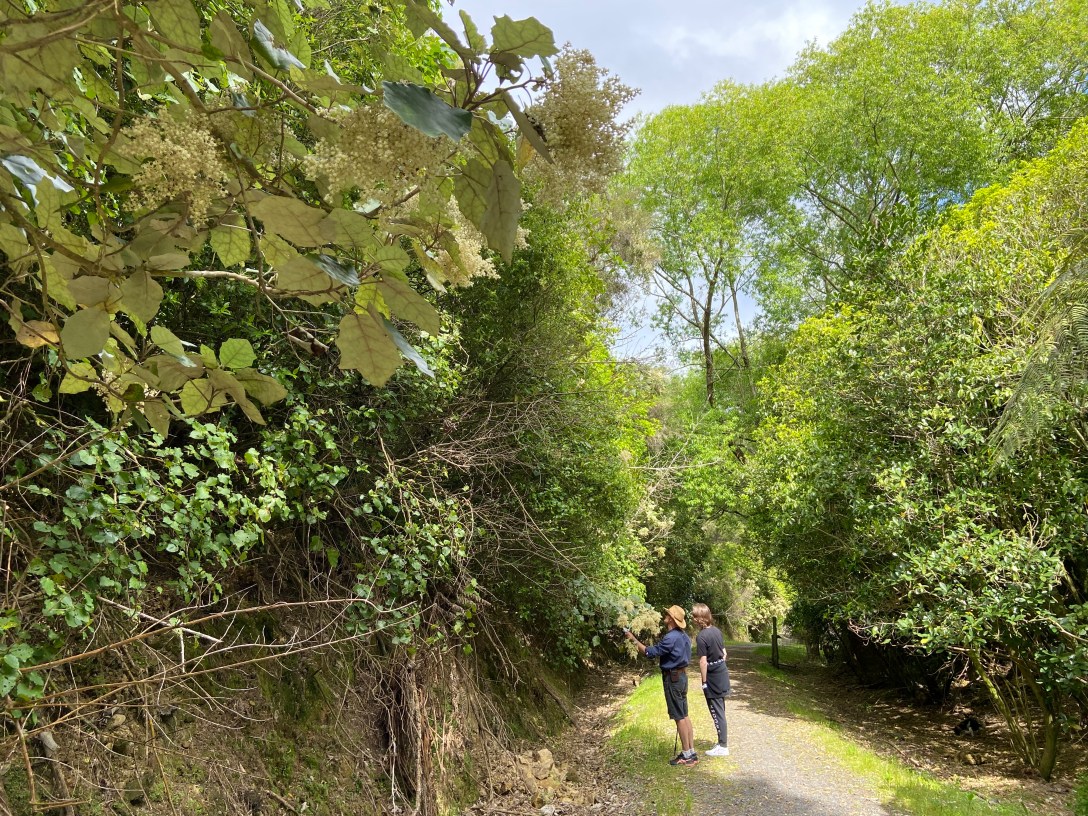
Ornamental cherry, lavender, magnolia, camelia, and rhododendron were the first noticeable signalers on berms, leaning over private fences. Now it’s the dreamy scents from the less obvious flowers of our native trees which are luring me and the pollinators. There’s the small cream, white or pale green florets of tarata (lemonwood), rangiora, tī kōuka/cabbage tree, pāpāuma/kāpuka/griselinia and the dark purple/red of kōhūhū, karo and the stunning spiky orbs of rewarewa. Frustratingly I can’t follow everywhere the bees, moths, beetles and flies go, up high or deep into bushes or in other people’s gardens.
Continue reading “Following fragrance and frenzy”Kōwhai calling
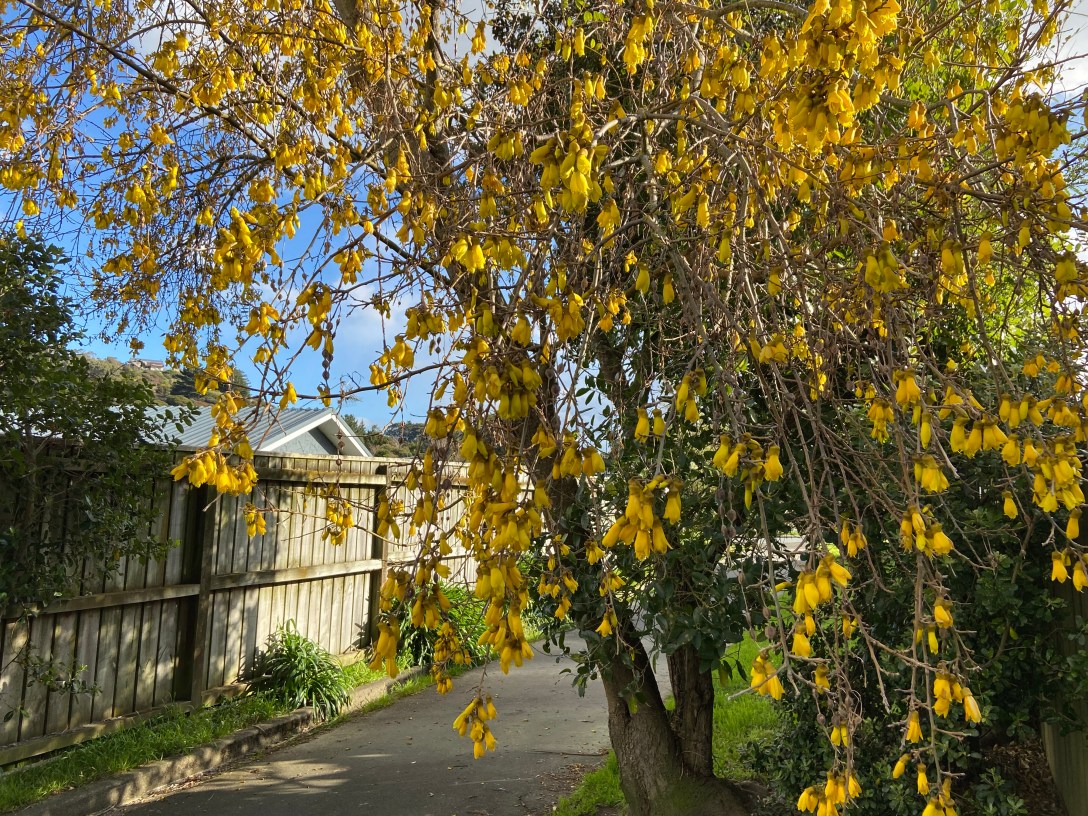
blazes of gold summoning across the commons tui dive and sup small sticky boots wedge inside deeper than I can follow


Welcome to Edge of Things
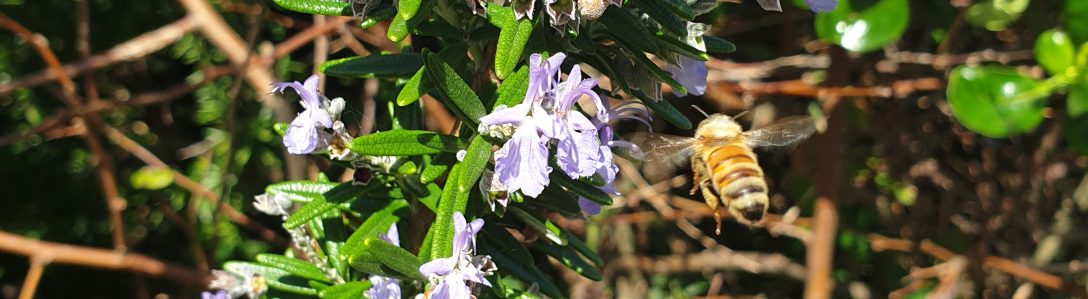
Welcome to this experimental journey where I’m attempting to pay closer attention to everyday encounters with pollinator insects like bees, butterflies, and moths in the places we live. Insects are declining drastically across the planet, yet they are vital to all life. I’m curious about who survives in my neighbourhood, how we relate with them, or they with us. So, I’ve committed to a walking routine along various street verges, tracks, unused plots, and small parks in the Porirua suburb of Whitby, plus my own tiny backyard, to journal, photograph and video day-to-day moments with these more=than-human beings. I’m also seeking to connect with my neighbours, locals, and others to gather and share stories of encounters with the insects.
Why am I doing this?
I’m a journalist, communicator and artist and this blog is part of a research project with Victoria University of Wellington. Like so many others during our COVID lockdowns, I noticed that when the human buzz subsided, we had space to notice little things in backyards and on local walks. We heard uncommon trills, chimes, and warbles across valleys and city streets. Bees hummed around wildflowers popping up in less manicured and neglected verges. When humans retreated, it seemed there was an opening for other beings to re-flourish. I’m hoping to creatively explore these relationships further, particularly with insects who often go unnoticed.
Continue reading “Welcome to Edge of Things”