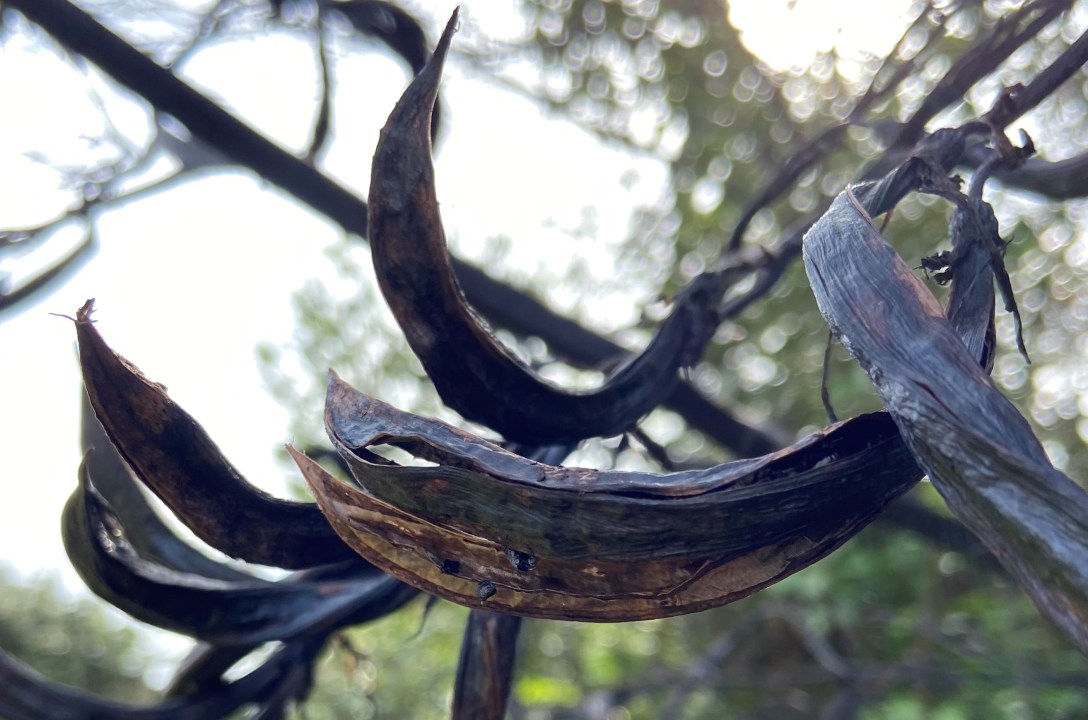
She is tattered, at the end of her short life. Her body shakes and shivers. I tiptoe closer but she’s too preoccupied to bother with me. Slowly she clasps a bunch of leaves with thin black legs and draws her abdomen up into a sickle shape, with the tip pressing under a leaf depositing a tiny pale-yellow egg. She repeats this process several times resting in between, vibrating. It’s a big effort and I marvel at her energy and determination. At her peak she may have been laying between 300-400 eggs at a rate of 40 eggs a day! Now on her last legs she is perhaps the last of the female monarchs that will visit our swan plant/milkweed. There is a slim chance her offspring might slowly pupate through winter and emerge as new adults in spring. And there are other reminders that this is a time, a season, of dying and release.
Continue reading “Last dance”Tag: patterns
Monarch dance
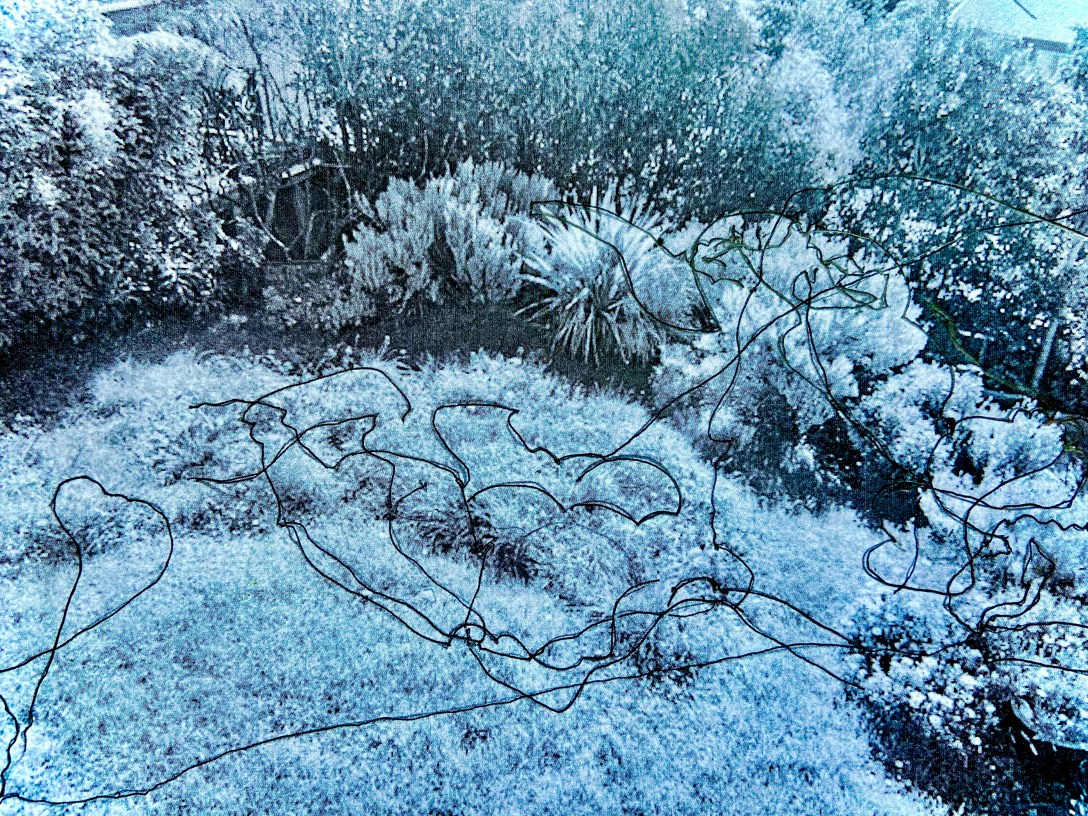
Earlier this year I watched as one of the first monarch butterflies circled the milkweed/swan plant below our deck. This time I grabbed a pencil and traced her flow on paper, intrigued at her mysterious path of many careful circuits. The drawing ends up a puzzling maze, as if meant to confuse. My notes read she spends minutes circling and making approaches to the plant, swooping past pumpkins, the mustard seed, the raspberries, the snowball tree, diverting attention? Perhaps checking it’s safe, scenting? It’s a dizzying energetic dance, never still. I trace the lines over and over trying to follow the complicated passage.
Continue reading “Monarch dance”Seeds, winds, circlings
Autumn equinoctial winds whip through neighbourhood lanes. It’s a circling back to this time last year when I began consciously noticing and photographing what’s happening with insect pollinators and other more-than-humans living here.
Hopping chaffinches laboriously harvest the oily black seeds spinning out of cracked flax pods. And the wax eyes have arrived back in the hebes, picking at a potpouri of seed heads. Swollen fruit and berries – from flowers fertilised earlier by pollinators – begin to release and die. A profusion of their seeds scatter out. Capsules of future life. The valley reminds me of the repeating pulses, patterns and cycles. Old friends again.
Continue reading “Seeds, winds, circlings”Crimson language
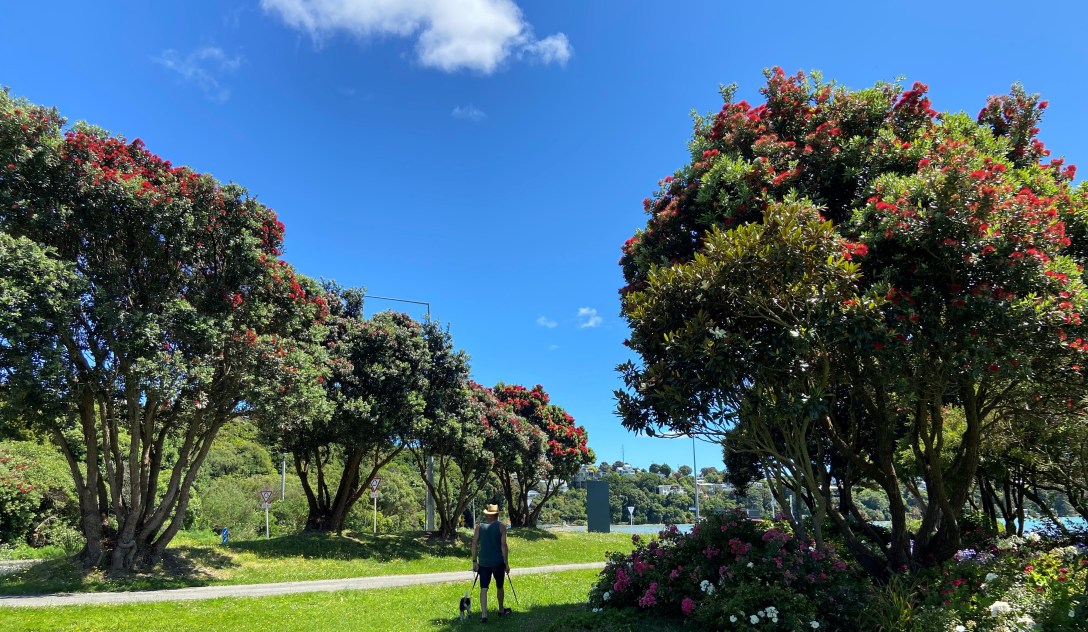
Like life blood through veins, pohutukawa blossoms course through the neighbourhood streets. It’s an intriguing pattern that pulses from tree to tree, as if by relay. First some, followed by others. Could there be something more than geography and climate that’s influencing this pattern? The trees in this community are close and experience the same weather.
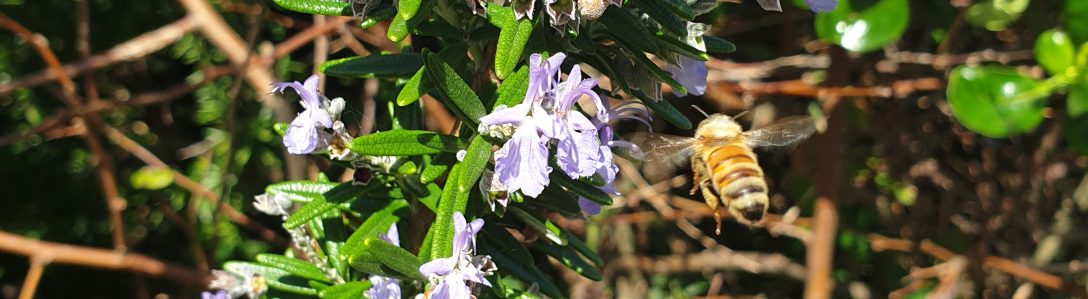
Mike, a local, from Harris Road Honey, once told me that when the pohutukawa flower the honeybees will eat little else. I notice that as each tree blossoms the frenzied bees move in, undertaking what looks like an exhaustive pollination/eating session. How does the alliance and kinship language transmit between tree and pollinators to maximise their relationship? Perhaps by staggering their flowering, the trees share the attention of the local pollinators rather than scattering the bees’ focus across all trees at the same time. Potentially it creates a more comprehensive pollination for each pohutukawa and lengthens the their pollination/food period. A win win for tree and bee.
Continue reading “Crimson language”Pinpoints of energy
I’m underneath a large pohutukawa, my shoulder blades resting in earth, looking up at the fiery ring of blossoms etched out by sky and sun.
Light catches translucent wings of tens of hundreds of bees, and other flying insects attracted to the blaze. Pinpoints of energy, life patterning through air.
I’m stuck on the ground.
Kinetic paths and orientation
Still stuck at home with the flu, with little energy to much neighbourhood walking, Instead I get curious about the vitality of insects, and attempt to map their kinetic energy and pollinating pathways, during moments of warmth and sun following days of grey skies and rain. For half an hour I make line drawings, trying not to look at the paper, letting my eye and hand follow the paths of bees and flies as they fly in and out of frame, feeding on flowers.
Continue reading “Kinetic paths and orientation”