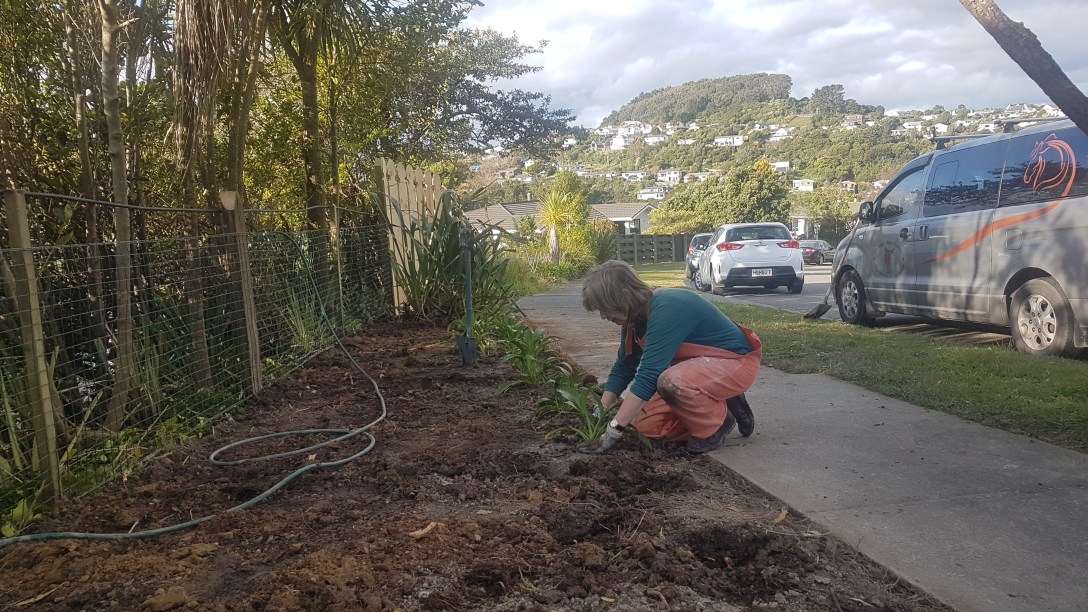
When I first started this journey, I began trialing the ‘No Mow‘ approach, leaving a portion of our small lawn un-mowed. Just to see what happened. What I witnessed was eye opening, challenging our suburban norms of why we have so many grass lawns and berms. It drew me to another form of action – planting an eco berm pathway which could connect our insect pollinators to fragments of bush, and at the same time maybe connect people who live here.
I’d gingerly put out some feelers on the Whitby Community Facebook and Neighbourly pages seeking thoughts about day to day urban experiences and connections with insect pollinators. Luke was among those who responded. I was thrilled when he invited me to pop round and chat about his gardening style. He had a plan to convert a grass strip alongside the driveway into wildflowers for bees, butterflies and other more-than-human neighbours. Yet on that warm afternoon there was something more I witnessed in the encounter.
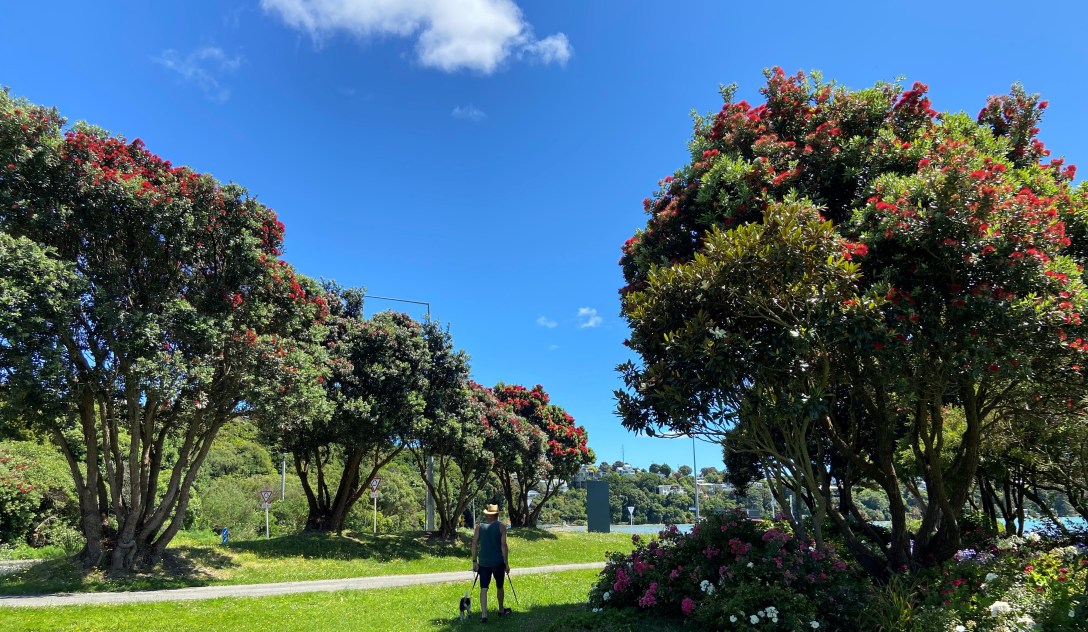
Like life blood through veins, pohutukawa blossoms course through the neighbourhood streets. It’s an intriguing pattern that pulses from tree to tree, as if by relay. First some, followed by others. Could there be something more than geography and climate that’s influencing this pattern? The trees in this community are close and experience the same weather.
Mike, a local, from Harris Road Honey, once told me that when the pohutukawa flower the honeybees will eat little else. I notice that as each tree blossoms the frenzied bees move in, undertaking what looks like an exhaustive pollination/eating session. How does the alliance and kinship language transmit between tree and pollinators to maximise their relationship? Perhaps by staggering their flowering, the trees share the attention of the local pollinators rather than scattering the bees’ focus across all trees at the same time. Potentially it creates a more comprehensive pollination for each pohutukawa and lengthens the their pollination/food period. A win win for tree and bee.
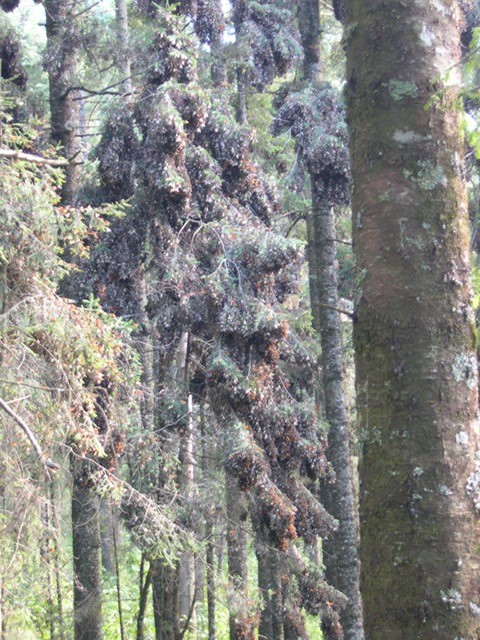
Whitby locals Alan and Marie, have kindly allowed me to share a couple their stunning photos (above and below) from their trek to visit endangered monarch butterflies overwintering in Mexico’s Sierra Chincua sanctuary. At about this time of year (Northern Hemisphere’s autumn) the butterflies migrate up to 3,000 miles from Canada and North America – an incredible natural phenomenon.* “The sound of their flapping was like light rain” says Alan. Their local guide, Raúl Hernández, remarked “if there was a god they would be here”, recalls Marie. Her thoughts drift back to when they heard, years later, that Raúl and fellow activist and manager of the federally protected Reserva de Biosfera de la Mariposa Monarca (Monarch Butterfly Biosphere Reserve) were killed in suspicious circumstances. The tensions between local communities seeking sustainable tourism from the Reserve and others carrying out logging and clearcutting for avocado plantations underscore the forced marginalisation of human and butterfly from ancient lands.
The trip inspired Marie and Alan to do something for the Whitby butterfly population and other pollinators. So over a cuppa we started talking about that but the conversation seemed to have its own pathway, floating, butterfly-like, into discussions about living in a community and a collective culture in a local place.
Tree branches droop with the weight of millions of monarch butterflies, wings closed, in huge clusters of tightly packed formations. Their brown masses well camouflaged, resembling parts of the oyamel fir and pine forestsin which they overwinter in Mexico.
Photo credit here and above: Alan and Marie Roberts, Whitby



 Edge of Things