Contemplating eco berms, challenging norms?

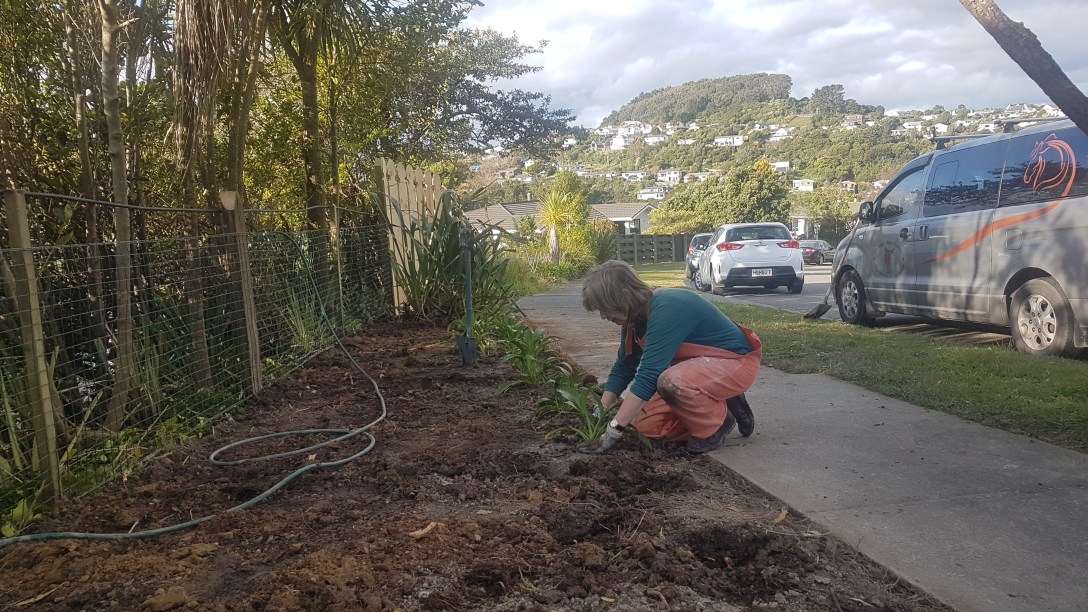
When I first started this journey, I began trialing the ‘No Mow‘ approach, leaving a portion of our small lawn un-mowed. Just to see what happened. What I witnessed was eye opening, challenging our suburban norms of why we have so many grass lawns and berms. It drew me to another form of action – planting an eco berm pathway which could connect our insect pollinators to fragments of bush, and at the same time maybe connect people who live here.

Continue reading “Contemplating eco berms, challenging norms?”

Mothing

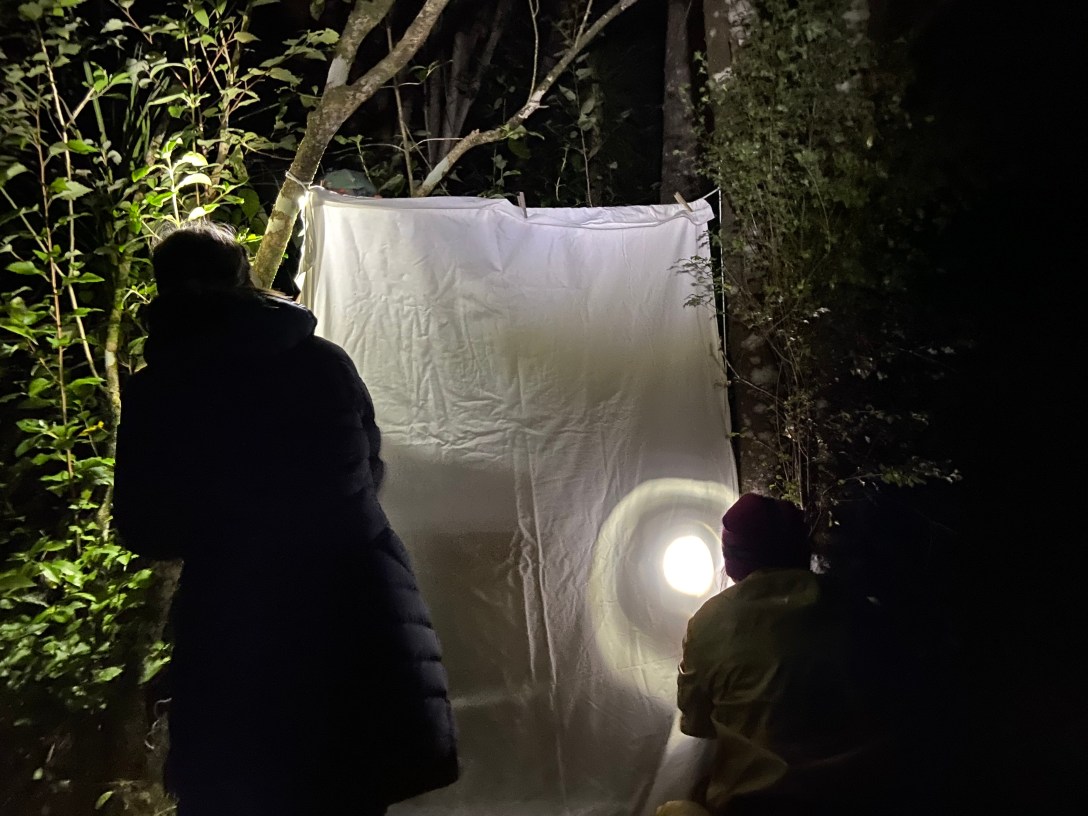
If you see torches flashing in the bush this Saturday night, you’ll know it’s just us!”  I’d emailed nearby neighbours to let them know a small group of us were going down the Carvel Walkway to discover what nocturnal moth neighbours we might have, attracting them to us with a home-made light trap.

Darkness descended around 8.30pm, our cue to head down to a spot in the bush, just beyond streetlights and glows from home windows. And if anyone was looking from those windows as we walked past they may well have fallen about laughing. Fey had jokingly made us bibs titled moth count supervisor and moth count interns to wear over our rain jackets and over-trousers. And combined with flashing headlights strapped to beanies our rather bizarre looking convoy marched down the road. I really wasn’t sure how this experiment would go.

Continue reading “Mothing”

Departures

Some of the neighbours have gone suddenly, without word. I can’t say I really knew them well. They lived halfway down Postgate Drive and I stopped by to say hello now and again. I had always admired their intricate home which took ages to build. They were a secretive lot though. Some said they belonged to a ‘Secret Service’.

I learned that night-time was their thing. The younger members ate remarkable amounts of fast food, while the adults, who had been through life changing events, were attracted to visiting others for drinks and snacks. Though no one seems sure of who they were visiting exactly. Except it was a life-giving exchange for both. 

Continue reading “Departures”

Following fragrance and frenzy

We are slowly tilting towards the sun’s warmth. Our neighbourhood is flushed with colour and fragrance. A frenzied relationship between flower-insect-bird is taking place: pollen movement and fertilisation for the plant and pollen protein and nectar energy for the pollinating insects and birds. The wild energy is understandable. Life is impermanent. The exchange is momentary.  

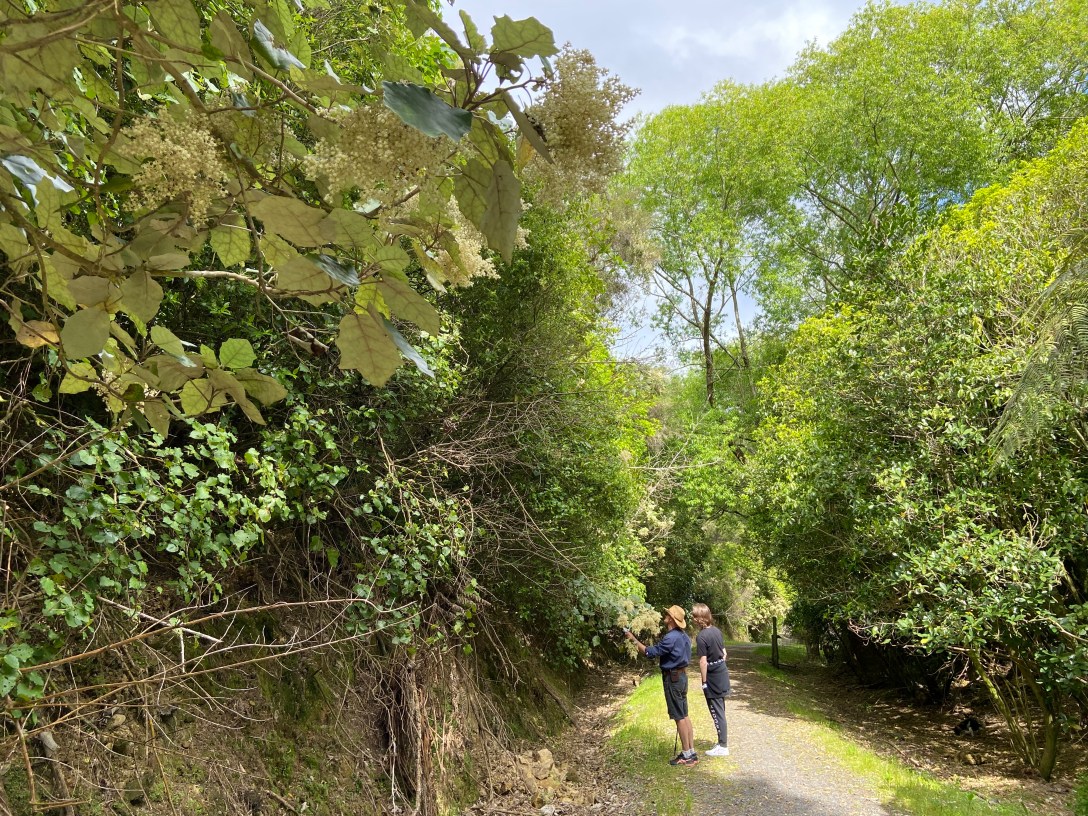
Ornamental cherry, lavender, magnolia, camelia, and rhododendron were the first noticeable signalers on berms, leaning over private fences. Now it’s the dreamy scents from the less obvious flowers of our native trees which are luring me and the pollinators. There’s the small cream, white or pale green florets of tarata (lemonwood), rangiora, tī kōuka/cabbage tree, pāpāuma/kāpuka/griselinia and the dark purple/red of kōhūhū, karo and the stunning spiky orbs of rewarewa. Frustratingly I can’t follow everywhere the bees, moths, beetles and flies go, up high or deep into bushes or in other people’s gardens.

Continue reading “Following fragrance and frenzy”

Wayfinding by Moon and Stars

I might be going balmy trying to rescue moths that have fluttered in through the kitchen door at night. It seems rather futile in the challenging swirl of the times – wars, pollution, deep fakes. What does it matter? But moths make me interested in the idea of navigation, of finding a way through. They are mostly nocturnal and orient themselves by the moon and stars. Our city lights confuse and startle this ancient ability to chart a course, and so the fragile beings batter away their short lives at our windows and streetlights that shine into the darkness – false beacons.  Some of our ancestors shared that same ability to navigate using celestial bodies, and some people still do. Others quest even further beyond moon and stars for direction and meaning. Are we all somehow drawn together through space, searching for a pathway beyond the incomprehensible?   

Continue reading “Wayfinding by Moon and Stars”

Night of the Bag Moth

Bag Moth

It’s Aotearoa Moth Week! Science communicator, Morgane Merien says moths or pūrerehua are incredibly important. We have over 1800 species of moths in New Zealand, with around 90% of them being unique to here. They get a “bad rap” but are wonderful pollinators – second only to bees, an important food source for birds, and indicators of healthy environments (like a canary in a coal mine). Yet, relatively little is known about them and whether they too are declining like many insects.

Continue reading “Night of the Bag Moth”