Mothing

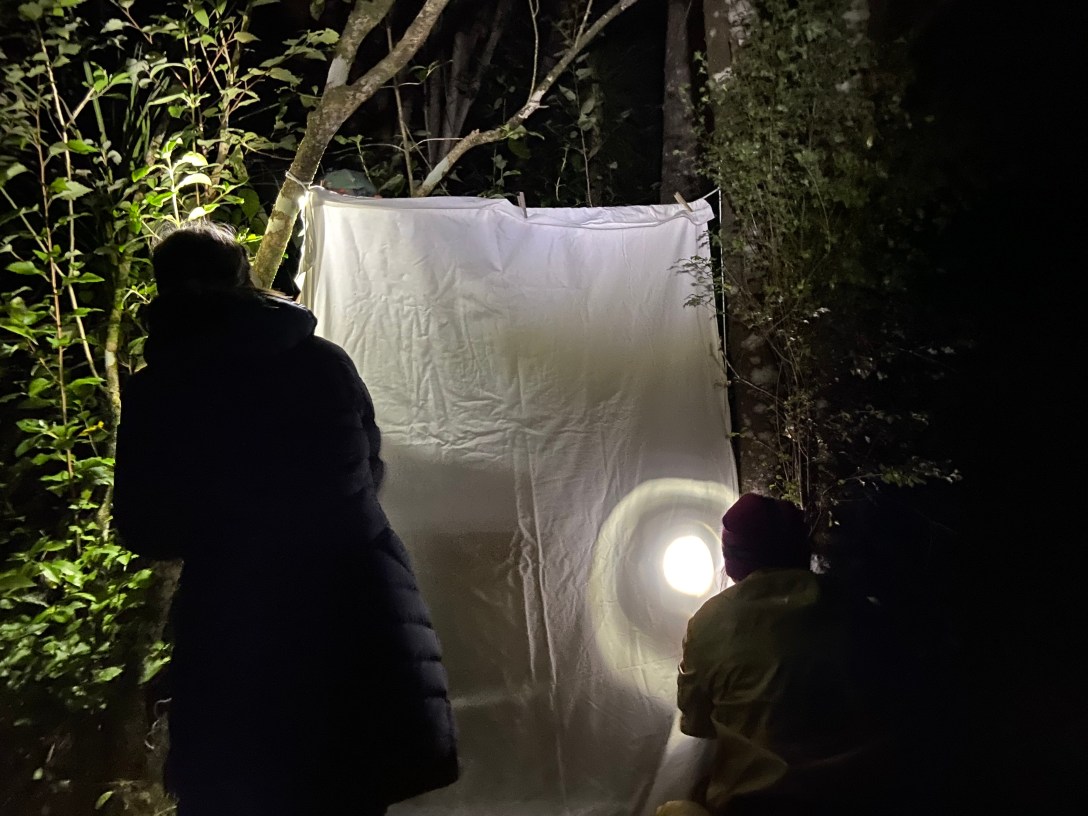
If you see torches flashing in the bush this Saturday night, you’ll know it’s just us!”  I’d emailed nearby neighbours to let them know a small group of us were going down the Carvel Walkway to discover what nocturnal moth neighbours we might have, attracting them to us with a home-made light trap.

Darkness descended around 8.30pm, our cue to head down to a spot in the bush, just beyond streetlights and glows from home windows. And if anyone was looking from those windows as we walked past they may well have fallen about laughing. Fey had jokingly made us bibs titled moth count supervisor and moth count interns to wear over our rain jackets and over-trousers. And combined with flashing headlights strapped to beanies our rather bizarre looking convoy marched down the road. I really wasn’t sure how this experiment would go.

Continue reading “Mothing”
Luke’s way of thinking

I’d gingerly put out some feelers on the Whitby Community Facebook and Neighbourly pages seeking thoughts about day to day urban experiences and connections with insect pollinators. Luke was among those who responded. I was thrilled when he invited me to pop round and chat about his gardening style. He had a plan to convert a grass strip alongside the driveway into wildflowers for bees, butterflies and other more-than-human neighbours. Yet on that warm afternoon there was something more I witnessed in the encounter.

Continue reading “Luke’s way of thinking”

Pinpoints of energy

I’m underneath a large pohutukawa, my shoulder blades resting in earth, looking up at the fiery ring of blossoms etched out by sky and sun.  

Light catches translucent wings of tens of hundreds of bees, and other flying insects attracted to the blaze. Pinpoints of energy, life patterning through air.

I’m stuck on the ground.  

Feet sense

Tim and I stopped at the shore of Browns Bay by the inlet and watched schools of mullet bubbling and swirling beneath the glinting surface.

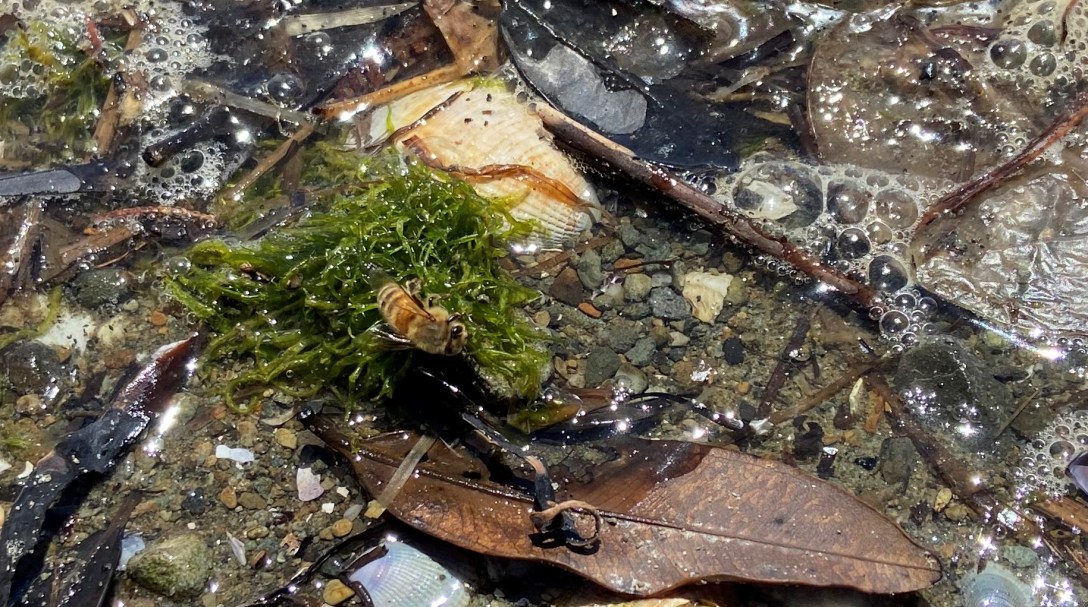
By the water’s edge I watched several honeybees hovering over the sand close to my feet. They were landing on small clumps of wet, green seaweed and walking over it – and tasting it! They weren’t interested in the dry seaweed, only the stuff being lapped by the small waves. What would the seaweed be providing them? Perhaps they were thirsty. I was so intrigued that I hoped online and read that honeybees have salt-sensing feet! They prefer slightly salted water and dirty water, which provide additional minerals and vitamins needed for their metabolism.  Some honey producers feed seaweed to their bee colonies during lean times and in an effort to counter bee diseases and colony collapses.

Stephanie Pappas, a contributing writer for Live Science, writes about the bees’ salt sensing feet