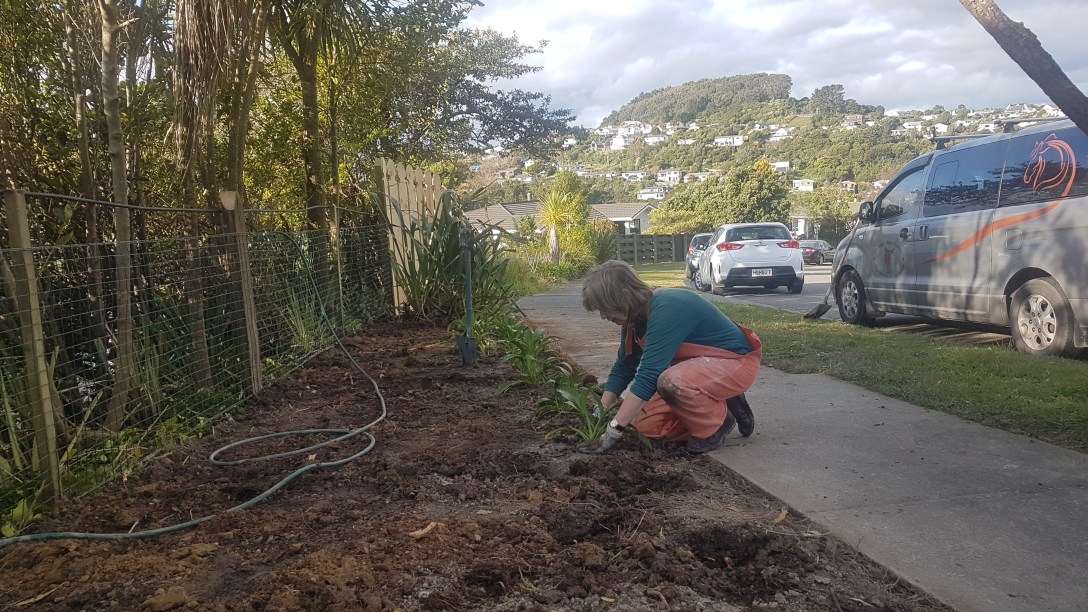
When I first started this journey, I began trialing the ‘No Mow‘ approach, leaving a portion of our small lawn un-mowed. Just to see what happened. What I witnessed was eye opening, challenging our suburban norms of why we have so many grass lawns and berms. It drew me to another form of action – planting an eco berm pathway which could connect our insect pollinators to fragments of bush, and at the same time maybe connect people who live here.
Continue reading “Contemplating eco berms, challenging norms?”Tag: community
Luke’s way of thinking
I’d gingerly put out some feelers on the Whitby Community Facebook and Neighbourly pages seeking thoughts about day to day urban experiences and connections with insect pollinators. Luke was among those who responded. I was thrilled when he invited me to pop round and chat about his gardening style. He had a plan to convert a grass strip alongside the driveway into wildflowers for bees, butterflies and other more-than-human neighbours. Yet on that warm afternoon there was something more I witnessed in the encounter.
Continue reading “Luke’s way of thinking”Departures
Some of the neighbours have gone suddenly, without word. I can’t say I really knew them well. They lived halfway down Postgate Drive and I stopped by to say hello now and again. I had always admired their intricate home which took ages to build. They were a secretive lot though. Some said they belonged to a ‘Secret Service’.
I learned that night-time was their thing. The younger members ate remarkable amounts of fast food, while the adults, who had been through life changing events, were attracted to visiting others for drinks and snacks. Though no one seems sure of who they were visiting exactly. Except it was a life-giving exchange for both.
Continue reading “Departures”Marie and Alan: on living alongside others
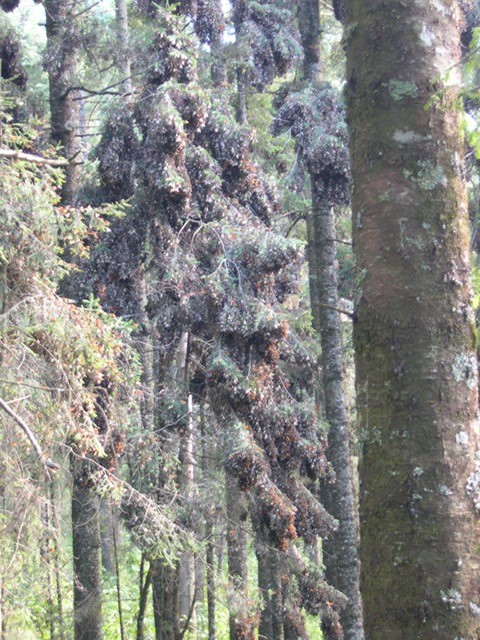
Whitby locals Alan and Marie, have kindly allowed me to share a couple their stunning photos (above and below) from their trek to visit endangered monarch butterflies overwintering in Mexico’s Sierra Chincua sanctuary. At about this time of year (Northern Hemisphere’s autumn) the butterflies migrate up to 3,000 miles from Canada and North America – an incredible natural phenomenon.* “The sound of their flapping was like light rain” says Alan. Their local guide, Raúl Hernández, remarked “if there was a god they would be here”, recalls Marie. Her thoughts drift back to when they heard, years later, that Raúl and fellow activist and manager of the federally protected Reserva de Biosfera de la Mariposa Monarca (Monarch Butterfly Biosphere Reserve) were killed in suspicious circumstances. The tensions between local communities seeking sustainable tourism from the Reserve and others carrying out logging and clearcutting for avocado plantations underscore the forced marginalisation of human and butterfly from ancient lands.
The trip inspired Marie and Alan to do something for the Whitby butterfly population and other pollinators. So over a cuppa we started talking about that but the conversation seemed to have its own pathway, floating, butterfly-like, into discussions about living in a community and a collective culture in a local place.

Tree branches droop with the weight of millions of monarch butterflies, wings closed, in huge clusters of tightly packed formations. Their brown masses well camouflaged, resembling parts of the oyamel fir and pine forests in which they overwinter in Mexico.
Photo credit here and above: Alan and Marie Roberts, Whitby
Bee-kin
Spotted this cool sign on a neighbourhood fence during a Whitby walk. Made me smile. I love that the invitation to passers-by has an openness to interpretation. Be kind to bees, be kind in general, and maybe beekind, as in bees being considered collectively, as in humankind!
Continue reading “Bee-kin”Welcome to Edge of Things
Welcome to this experimental journey where I’m attempting to pay closer attention to everyday encounters with pollinator insects like bees, butterflies, and moths in the places we live. Insects are declining drastically across the planet, yet they are vital to all life. I’m curious about who survives in my neighbourhood, how we relate with them, or they with us. So, I’ve committed to a walking routine along various street verges, tracks, unused plots, and small parks in the Porirua suburb of Whitby, plus my own tiny backyard, to journal, photograph and video day-to-day moments with these more=than-human beings. I’m also seeking to connect with my neighbours, locals, and others to gather and share stories of encounters with the insects.
Why am I doing this?
I’m a journalist, communicator and artist and this blog is part of a research project with Victoria University of Wellington. Like so many others during our COVID lockdowns, I noticed that when the human buzz subsided, we had space to notice little things in backyards and on local walks. We heard uncommon trills, chimes, and warbles across valleys and city streets. Bees hummed around wildflowers popping up in less manicured and neglected verges. When humans retreated, it seemed there was an opening for other beings to re-flourish. I’m hoping to creatively explore these relationships further, particularly with insects who often go unnoticed.
Continue reading “Welcome to Edge of Things”