Last dance

She is tattered, at the end of her short life. Her body shakes and shivers. I tiptoe closer but she’s too preoccupied to bother with me. Slowly she clasps a bunch of leaves with thin black legs and draws her abdomen up into a sickle shape, with the tip pressing under a leaf depositing a tiny pale-yellow egg. She repeats this process several times resting in between, vibrating. It’s a big effort and I marvel at her energy and determination. At her peak she may have been laying between 300-400 eggs at a rate of 40 eggs a day! Now on her last legs she is perhaps the last of the female monarchs that will visit our swan plant/milkweed. There is a slim chance her offspring might slowly pupate through winter and emerge as new adults in spring. And there are other reminders that this is a time, a season, of dying and release.

Continue reading “Last dance”
Seeds, winds, circlings

Autumn equinoctial winds whip through neighbourhood lanes. It’s a circling back to this time last year when I began consciously noticing and photographing what’s happening with insect pollinators and other more-than-humans living here.

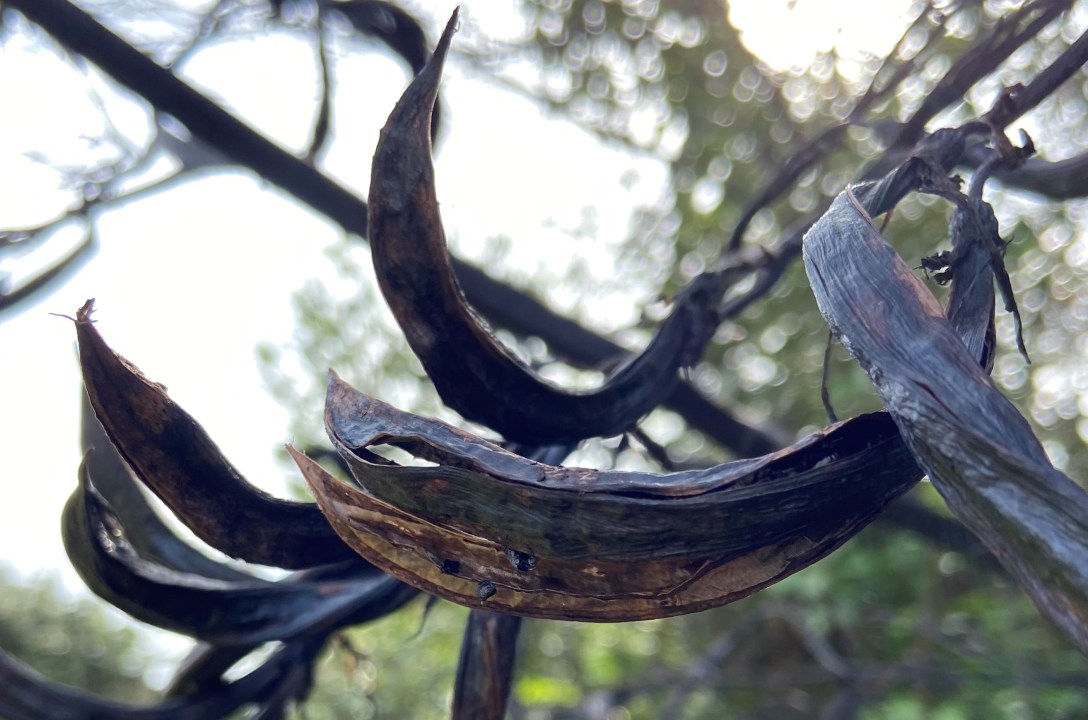
Hopping chaffinches laboriously harvest the oily black seeds spinning out of cracked flax pods. And the wax eyes have arrived back in the hebes, picking at a potpouri of seed heads. Swollen fruit and berries – from flowers fertilised earlier by pollinators – begin to release and die. A profusion of their seeds scatter out. Capsules of future life. The valley reminds me of the repeating pulses, patterns and cycles. Old friends again.

Continue reading “Seeds, winds, circlings”

First fruits

Picking ripening apples and plums on garden trees, foraging for blackberries in gullies, watching swelling pumpkins and birds eating karaka and karamu berries. Today I’m acknowledging all the unpaid work of our pollinator neighbours which now bears juicy fruit under the midsummer heat. Food for all of us – humans and more-than-humans.

Artist, writer and psychotherapist Juliet Batten’s calls this time ‘First Fruits’ – Te Waru (Māori) Lugnasad (Celtic) Lammas (Christian). It celebrates early harvest time and is one of eight seasonal markers based on pre-Christian nature-based festivals, brought into rhythm with Aotearoa’s southern seasons and into a relationship with practices and knowledge of Te Ao Māori.

Link to Juliet Batten and her books