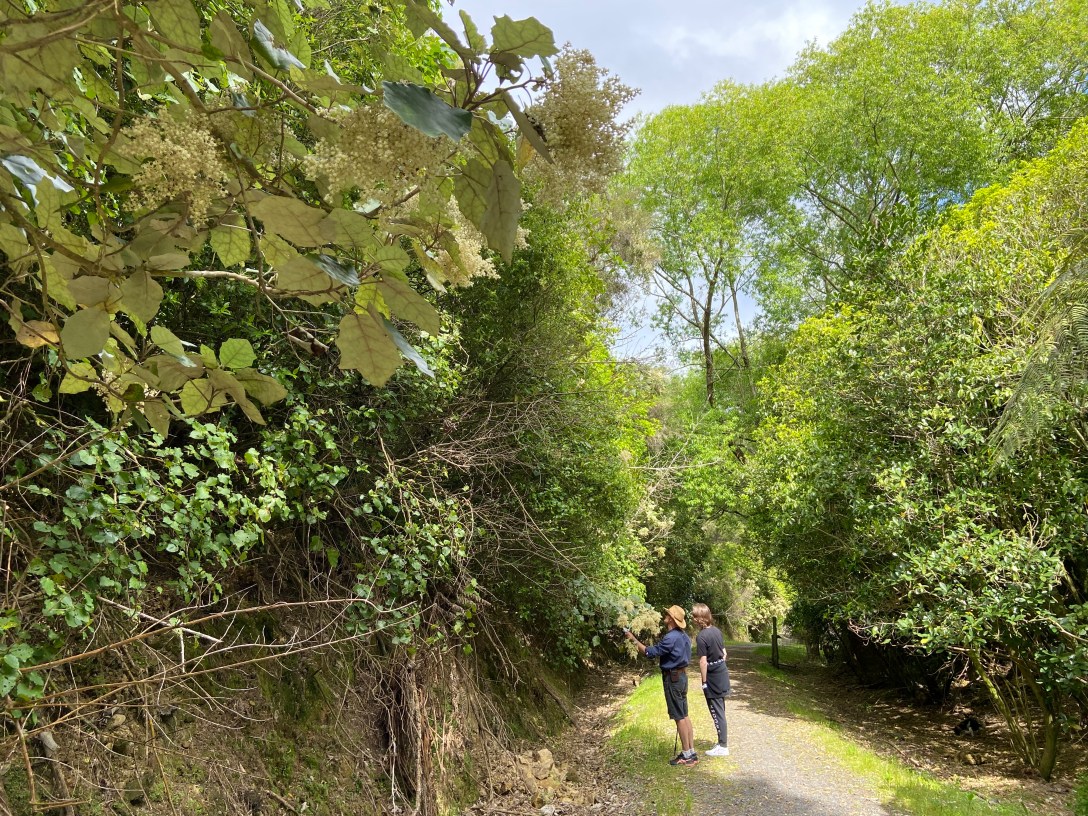
When the tail end of Cyclone Gabrielle spun away from us in Pauatahanui things became eerily still. I had an intense urge to climb up somewhere, perhaps to try and make sense of the climate tragedy that just happened further north. At the top of Kahu Road the rain and wind departed and the sky started to clear. The only sound was the intense ringing of cicadas, as if shouting out the shock that vibrated through our collective psyche.
Continue reading “After the cyclone”Category: Videos
Crimson language
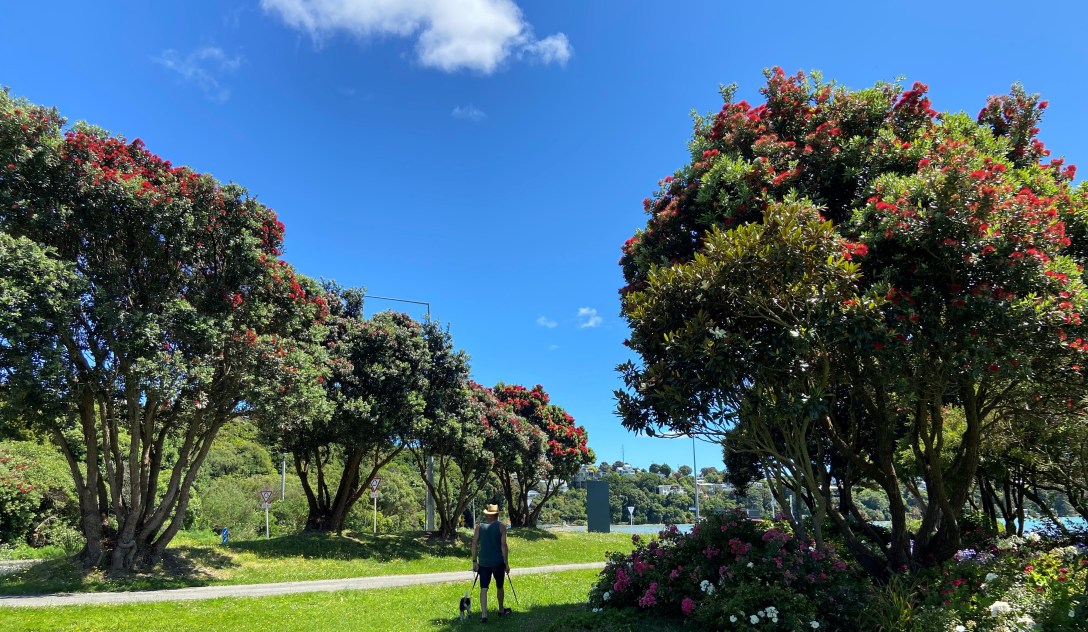
Like life blood through veins, pohutukawa blossoms course through the neighbourhood streets. It’s an intriguing pattern that pulses from tree to tree, as if by relay. First some, followed by others. Could there be something more than geography and climate that’s influencing this pattern? The trees in this community are close and experience the same weather.
Mike, a local, from Harris Road Honey, once told me that when the pohutukawa flower the honeybees will eat little else. I notice that as each tree blossoms the frenzied bees move in, undertaking what looks like an exhaustive pollination/eating session. How does the alliance and kinship language transmit between tree and pollinators to maximise their relationship? Perhaps by staggering their flowering, the trees share the attention of the local pollinators rather than scattering the bees’ focus across all trees at the same time. Potentially it creates a more comprehensive pollination for each pohutukawa and lengthens the their pollination/food period. A win win for tree and bee.
Continue reading “Crimson language”Pinpoints of energy
I’m underneath a large pohutukawa, my shoulder blades resting in earth, looking up at the fiery ring of blossoms etched out by sky and sun.
Light catches translucent wings of tens of hundreds of bees, and other flying insects attracted to the blaze. Pinpoints of energy, life patterning through air.
I’m stuck on the ground.
Following fragrance and frenzy
We are slowly tilting towards the sun’s warmth. Our neighbourhood is flushed with colour and fragrance. A frenzied relationship between flower-insect-bird is taking place: pollen movement and fertilisation for the plant and pollen protein and nectar energy for the pollinating insects and birds. The wild energy is understandable. Life is impermanent. The exchange is momentary.
Ornamental cherry, lavender, magnolia, camelia, and rhododendron were the first noticeable signalers on berms, leaning over private fences. Now it’s the dreamy scents from the less obvious flowers of our native trees which are luring me and the pollinators. There’s the small cream, white or pale green florets of tarata (lemonwood), rangiora, tī kōuka/cabbage tree, pāpāuma/kāpuka/griselinia and the dark purple/red of kōhūhū, karo and the stunning spiky orbs of rewarewa. Frustratingly I can’t follow everywhere the bees, moths, beetles and flies go, up high or deep into bushes or in other people’s gardens.
Continue reading “Following fragrance and frenzy”Bee-kin
Spotted this cool sign on a neighbourhood fence during a Whitby walk. Made me smile. I love that the invitation to passers-by has an openness to interpretation. Be kind to bees, be kind in general, and maybe beekind, as in bees being considered collectively, as in humankind!
Continue reading “Bee-kin”Night of the Bag Moth
It’s Aotearoa Moth Week! Science communicator, Morgane Merien says moths or pūrerehua are incredibly important. We have over 1800 species of moths in New Zealand, with around 90% of them being unique to here. They get a “bad rap” but are wonderful pollinators – second only to bees, an important food source for birds, and indicators of healthy environments (like a canary in a coal mine). Yet, relatively little is known about them and whether they too are declining like many insects.
Continue reading “Night of the Bag Moth”Moments in Warmth
I think I’m becoming obsessed with the temperature gauge as the weather flip flops between extremes. No sooner has a cold southerly snap arrived than it vanishes, followed by sudden and often intense heat. The other day it climbed to 17C in the shade and, for a time, the sun strike on our deck was 32C. Too hot to sit there! We heard on the radio that Japan had recorded its hottest June temperature ever – 40.2C. But the northern hemisphere is not even into its proper summer yet!
When the air temperature climbs I come across moments of frenzied insect activity on some of my walks. It seems to be the exotic plants they are dipping into such as flowering bottlebrush, dandelions, gorse, lavender, rosemary, buttercups, tree lucerne and nightshade, plus some natives including the odd manuka bush and hebes. What would they forage on in winter if it wasn’t for the introduced plants – some of them considered weeds.
Continue reading “Moments in Warmth”