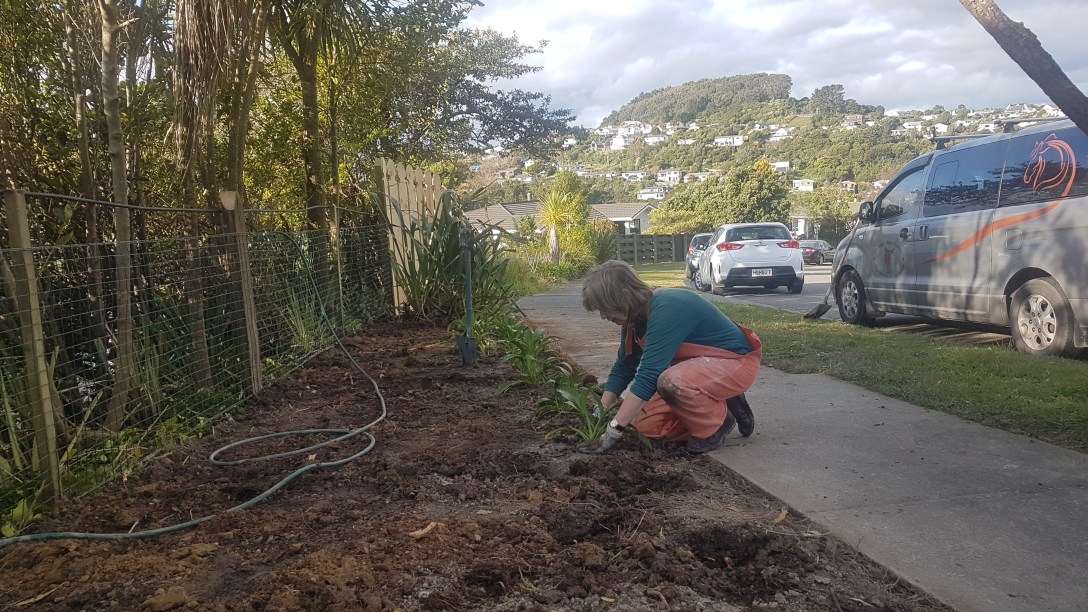
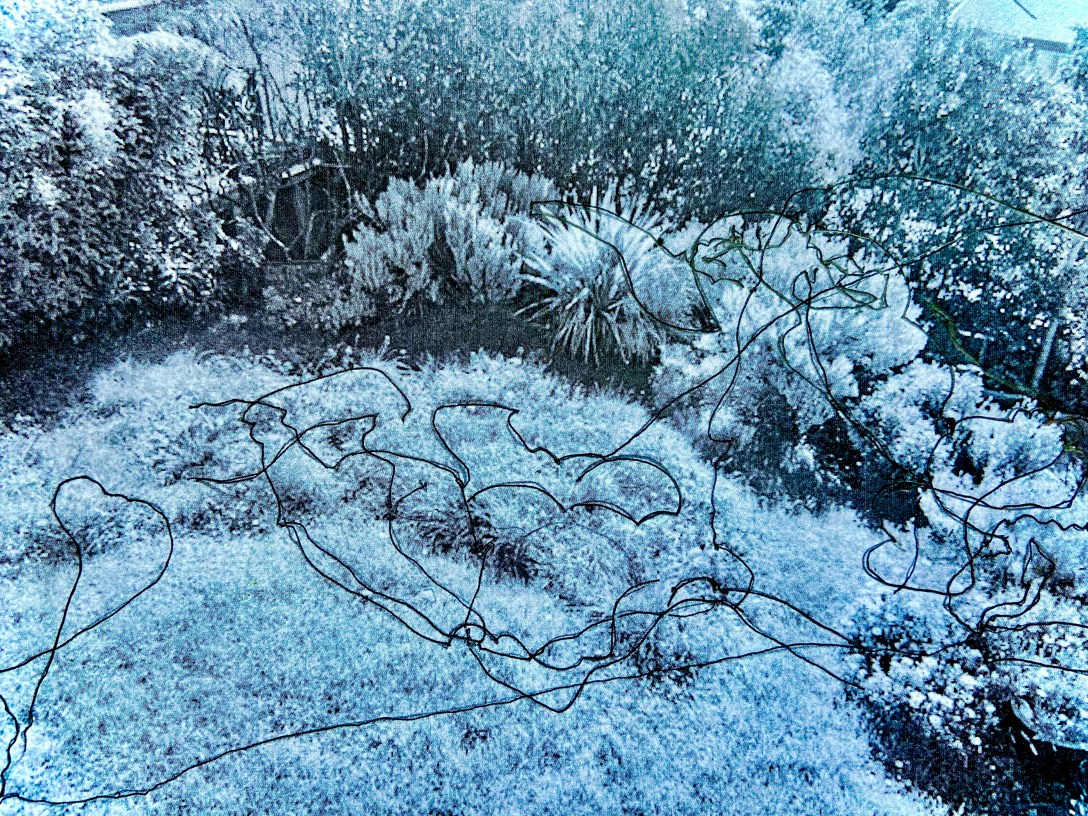
When I first started this journey, I began trialing the ‘No Mow‘ approach, leaving a portion of our small lawn un-mowed. Just to see what happened. What I witnessed was eye opening, challenging our suburban norms of why we have so many grass lawns and berms. It drew me to another form of action – planting an eco berm pathway which could connect our insect pollinators to fragments of bush, and at the same time maybe connect people who live here.
Continue reading “Contemplating eco berms, challenging norms?”Category: Spring
Departures
Some of the neighbours have gone suddenly, without word. I can’t say I really knew them well. They lived halfway down Postgate Drive and I stopped by to say hello now and again. I had always admired their intricate home which took ages to build. They were a secretive lot though. Some said they belonged to a ‘Secret Service’.
I learned that night-time was their thing. The younger members ate remarkable amounts of fast food, while the adults, who had been through life changing events, were attracted to visiting others for drinks and snacks. Though no one seems sure of who they were visiting exactly. Except it was a life-giving exchange for both.
Continue reading “Departures”Following fragrance and frenzy
We are slowly tilting towards the sun’s warmth. Our neighbourhood is flushed with colour and fragrance. A frenzied relationship between flower-insect-bird is taking place: pollen movement and fertilisation for the plant and pollen protein and nectar energy for the pollinating insects and birds. The wild energy is understandable. Life is impermanent. The exchange is momentary.
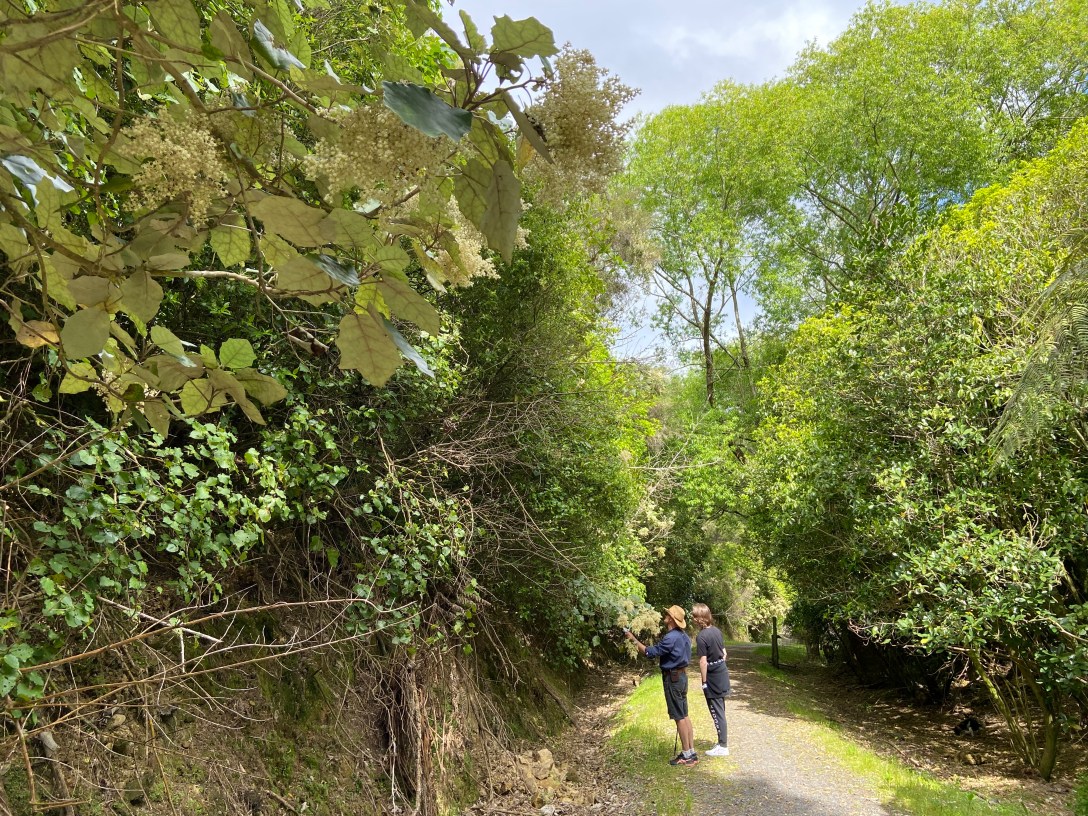
Ornamental cherry, lavender, magnolia, camelia, and rhododendron were the first noticeable signalers on berms, leaning over private fences. Now it’s the dreamy scents from the less obvious flowers of our native trees which are luring me and the pollinators. There’s the small cream, white or pale green florets of tarata (lemonwood), rangiora, tī kōuka/cabbage tree, pāpāuma/kāpuka/griselinia and the dark purple/red of kōhūhū, karo and the stunning spiky orbs of rewarewa. Frustratingly I can’t follow everywhere the bees, moths, beetles and flies go, up high or deep into bushes or in other people’s gardens.
Continue reading “Following fragrance and frenzy”Marie and Alan: on living alongside others
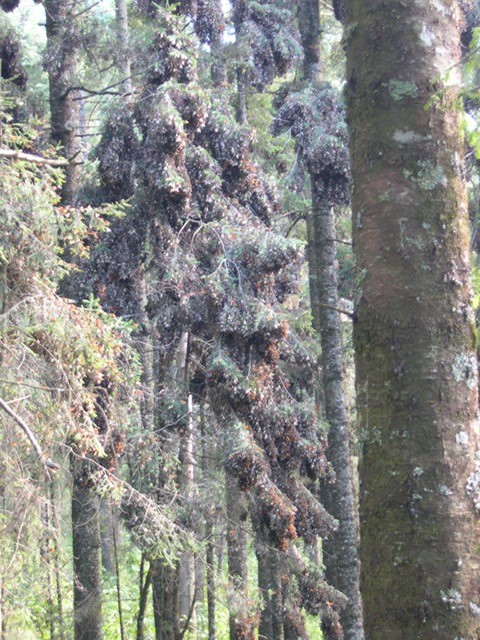
Whitby locals Alan and Marie, have kindly allowed me to share a couple their stunning photos (above and below) from their trek to visit endangered monarch butterflies overwintering in Mexico’s Sierra Chincua sanctuary. At about this time of year (Northern Hemisphere’s autumn) the butterflies migrate up to 3,000 miles from Canada and North America – an incredible natural phenomenon.* “The sound of their flapping was like light rain” says Alan. Their local guide, Raúl Hernández, remarked “if there was a god they would be here”, recalls Marie. Her thoughts drift back to when they heard, years later, that Raúl and fellow activist and manager of the federally protected Reserva de Biosfera de la Mariposa Monarca (Monarch Butterfly Biosphere Reserve) were killed in suspicious circumstances. The tensions between local communities seeking sustainable tourism from the Reserve and others carrying out logging and clearcutting for avocado plantations underscore the forced marginalisation of human and butterfly from ancient lands.
The trip inspired Marie and Alan to do something for the Whitby butterfly population and other pollinators. So over a cuppa we started talking about that but the conversation seemed to have its own pathway, floating, butterfly-like, into discussions about living in a community and a collective culture in a local place.

Tree branches droop with the weight of millions of monarch butterflies, wings closed, in huge clusters of tightly packed formations. Their brown masses well camouflaged, resembling parts of the oyamel fir and pine forests in which they overwinter in Mexico.
Photo credit here and above: Alan and Marie Roberts, Whitby
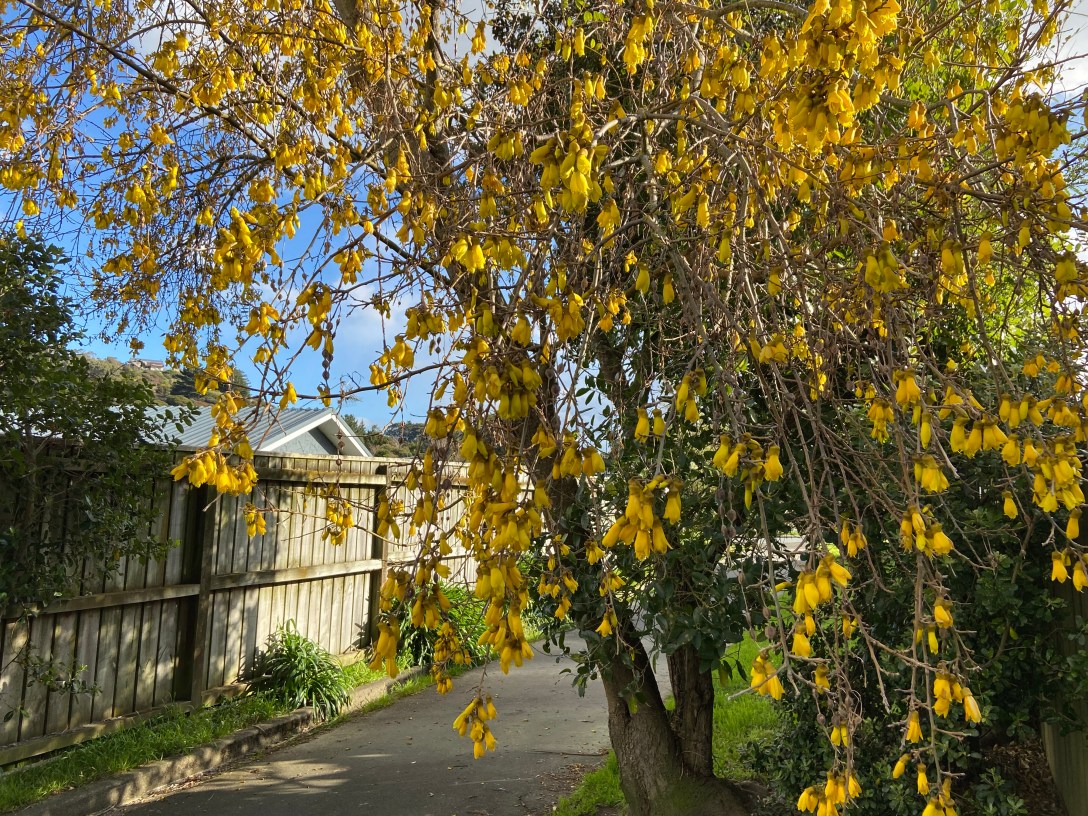
Kōwhai calling
blazes of gold summoning across the commons tui dive and sup small sticky boots wedge inside deeper than I can follow


Kinetic paths and orientation
Still stuck at home with the flu, with little energy to much neighbourhood walking, Instead I get curious about the vitality of insects, and attempt to map their kinetic energy and pollinating pathways, during moments of warmth and sun following days of grey skies and rain. For half an hour I make line drawings, trying not to look at the paper, letting my eye and hand follow the paths of bees and flies as they fly in and out of frame, feeding on flowers.
Continue reading “Kinetic paths and orientation”Lemon and Honey
Two incredibly good things made possible by insect pollinators. I’m stating the obvious of course.
But stirring the umpteenth cup of hot lemon and honey this week, for the whole family flattened by a nasty cold, the simple connectedness of it all, embodied in the therapeutic drink, strikes through my brain fog. The lemons, from a scraggy tree in the garden, were pollinated by bees and other insects several months ago. I remember watching them. And the multiflora honey, from local father and daughter beekeeper team Mike and Shona of Harris Road Honey, is made by honeybees, feeding on flowers around this neighbourhood. I stumble back to sleep, nourished by the drink and the interdependencies of insect, lemon tree, honey and human.