
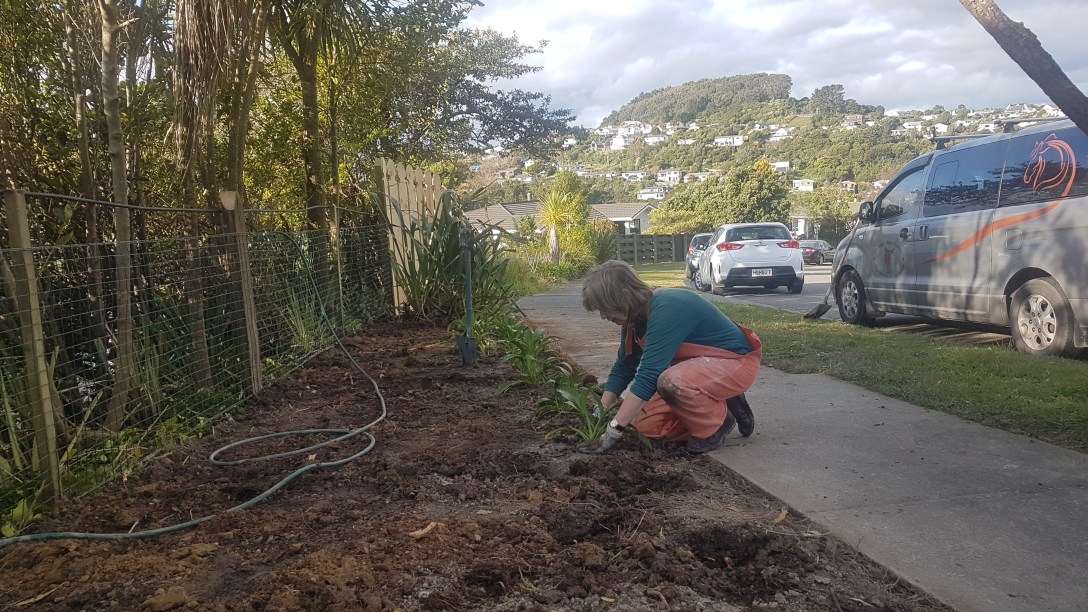
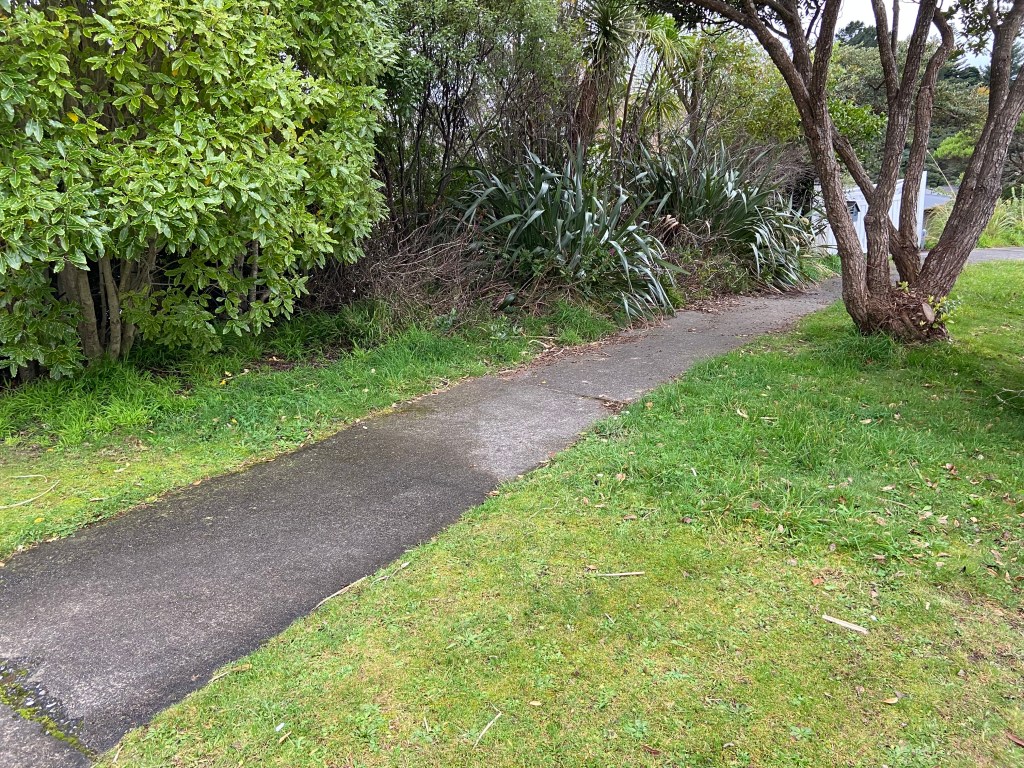
When I first started this journey, I began trialing the ‘No Mow‘ approach, leaving a portion of our small lawn un-mowed. Just to see what happened. What I witnessed was eye opening, challenging our suburban norms of why we have so many grass lawns and berms. It drew me to another form of action – planting an eco berm pathway which could connect our insect pollinators to fragments of bush, and at the same time maybe connect people who live here.
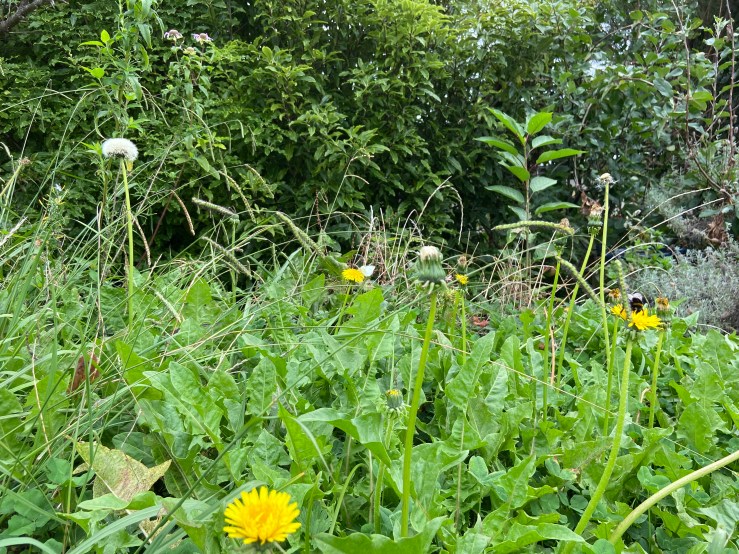
I watched our bit of ‘un-mowed’ lawn grow up over summer then subside over winter. It never got any higher than my knee. It’s now a whole world, in miniature.

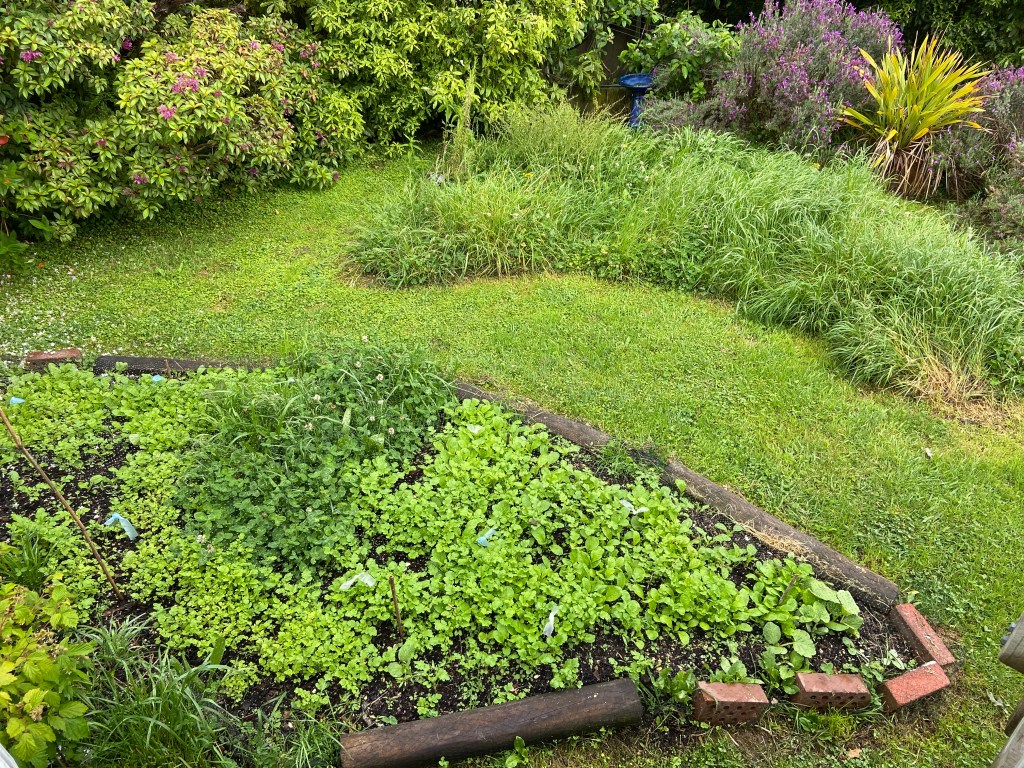
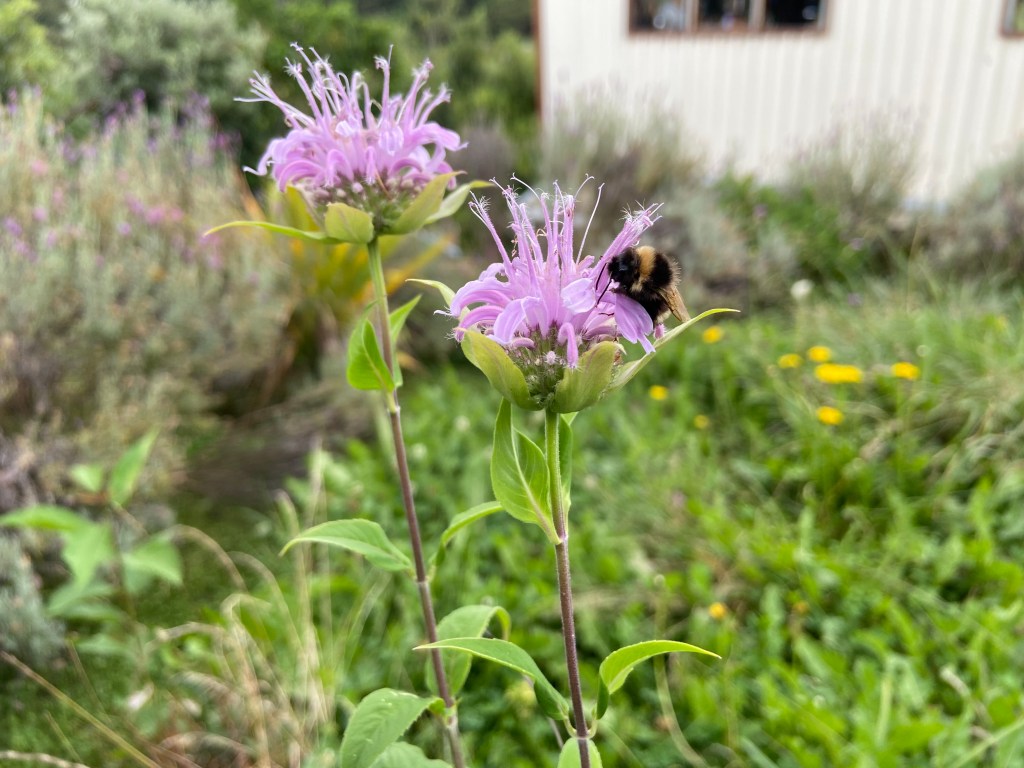
The tufty grass supports worms, beetles, moths and pea blue butterflies. Clover and dandelion provide nectar and pollen to hungry honeybees (like those of our local honey man Mike), bumblebees, and the less glam pollinators like drone flies and small hoverflies, especially in winter when there is not much else flowering. During storms the thick grass soaks up buckets of rain while the mowed lawn becomes a sludgy mess.
It got me curious about the dominance of mown grass culture in suburbs. Lawns date back to 17th century France and England. Decorative and hand cut, they were the preserve of the wealthy. It showed you had money. The trend later spread to the suburban class.* Today lawns and berms are still a luxury of sorts. Great for parks and play areas. But they are a lot of work and expensive to maintain.

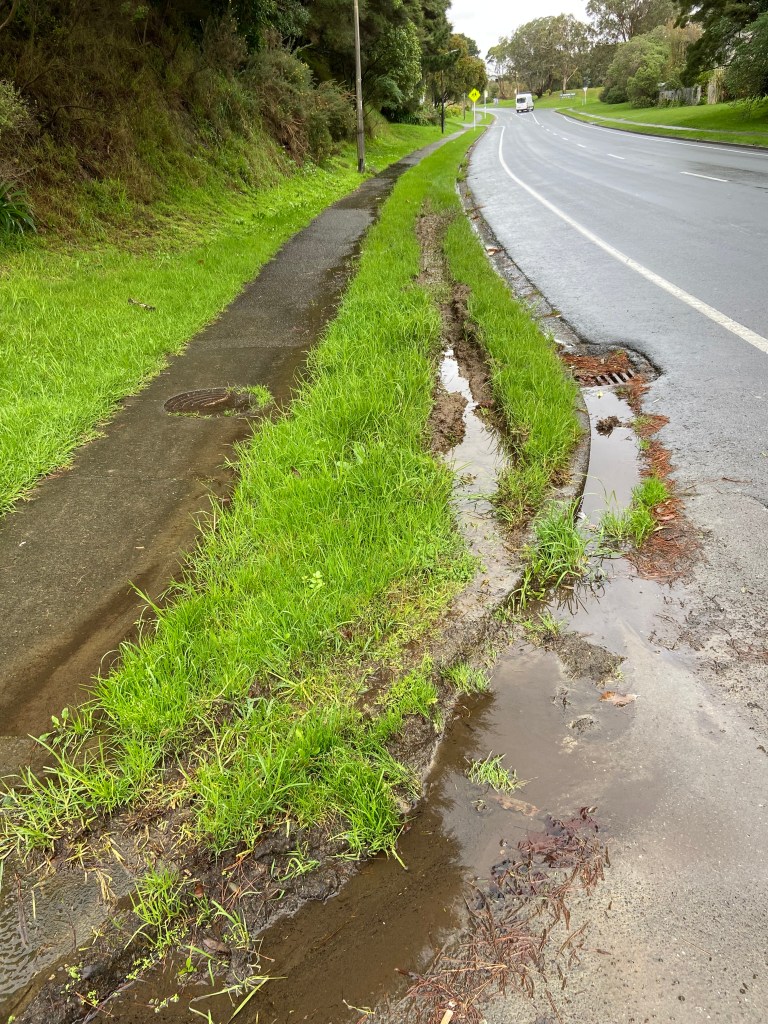
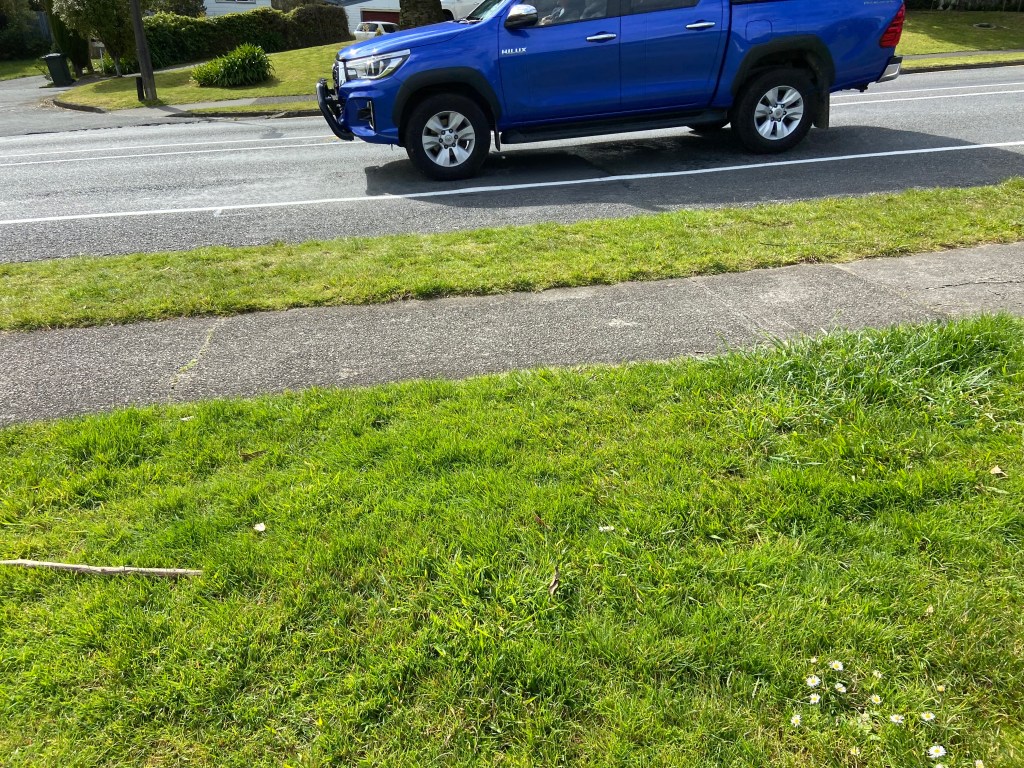

Plus shorn grass cannot soak up the unpredictable amounts of rain we’re getting as our climate changes and neighbourhoods flood. Swathes of closely mown grass are monocultures, providing little for our life-giving beneficial insects which we desperately need around us.
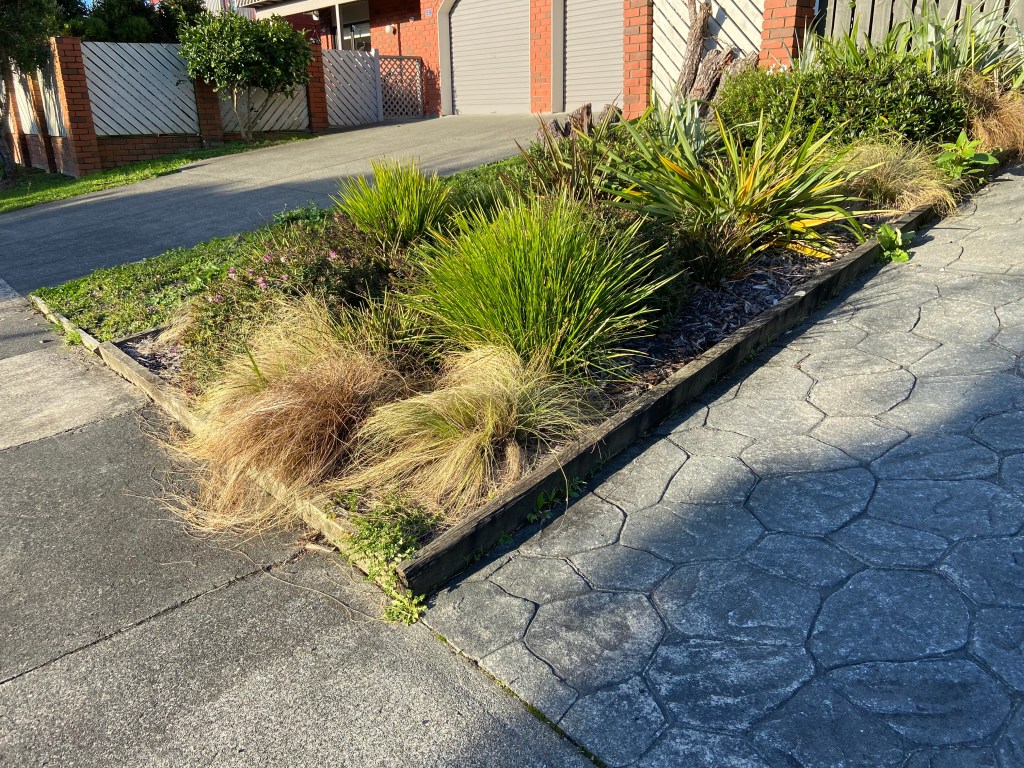
It got me thinking and I came across Andrea and the inspiring team at Pollinator Paths. Instead of maintaining kilometres of mown grass, what about creating corridors of native plants to support our unique native pollinators. They’ve have evolved alongside the flowers of New Zealand’s special plants and forests – a life giving exchange for both. These pollinators include the 28 species of native bees/ngaro huruhuru, the red admiral/kahukura, copper butterfly/pepe para riki and the nearly two thousand species of native moths! So little is known about them all, except that they are disappearing. Not only would we be connecting ecosystems across the Whitby landscape so pollinators and other species can thrive but also helping turn our local road corridors into climate change ready infrastructure.

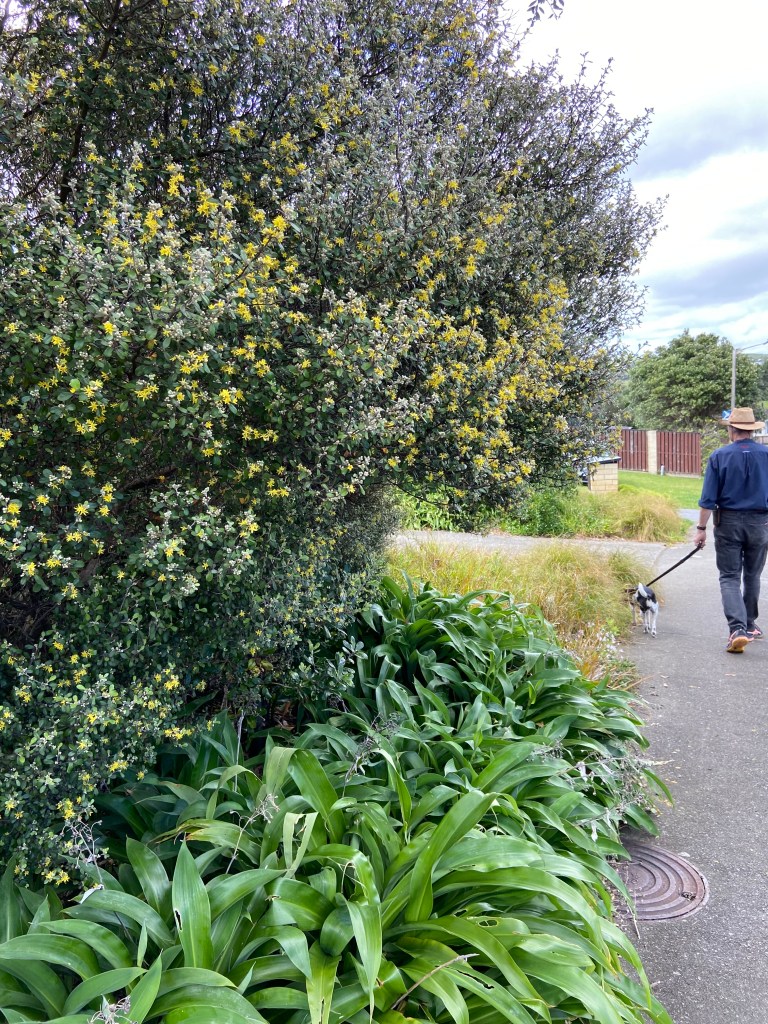
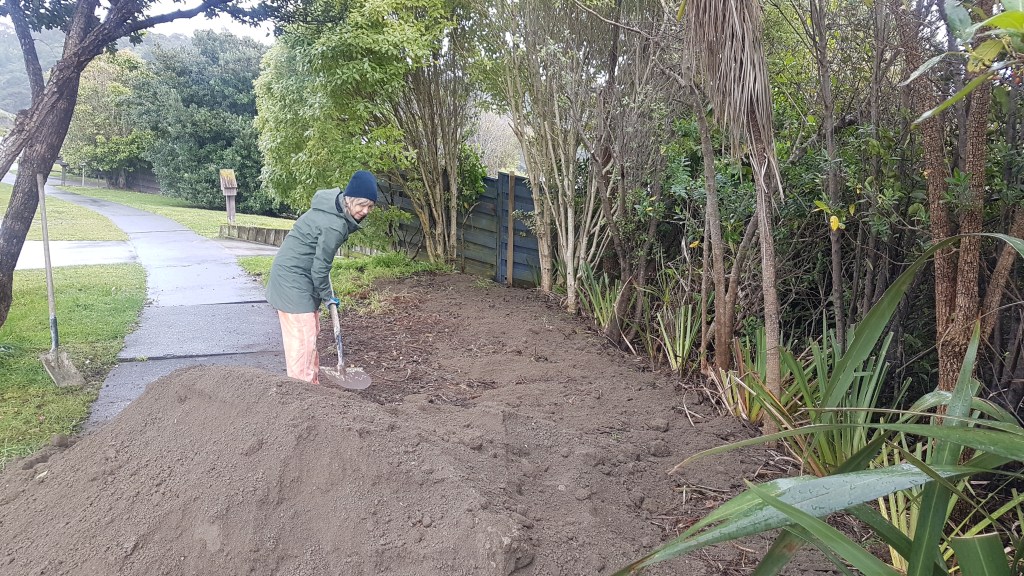
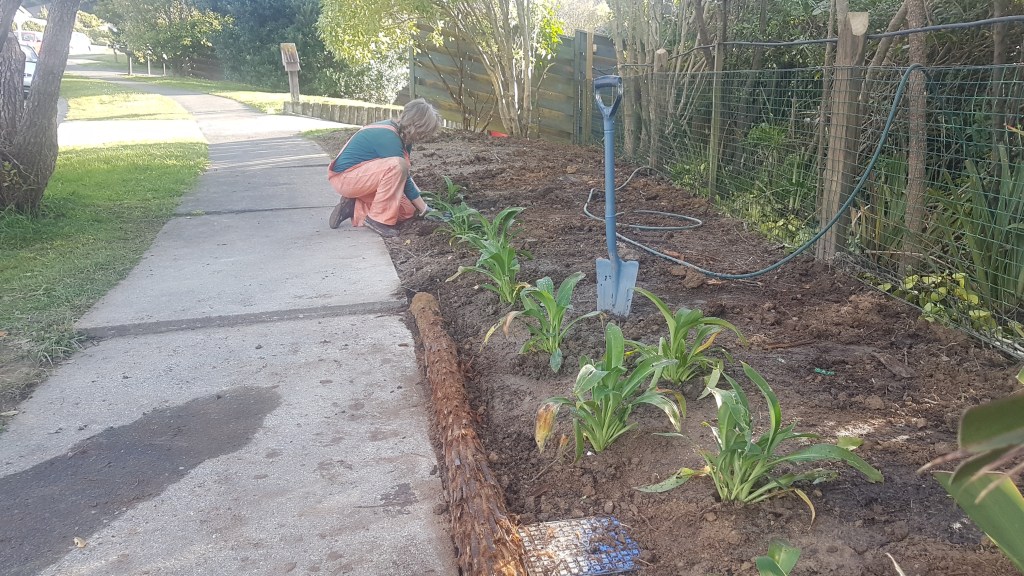
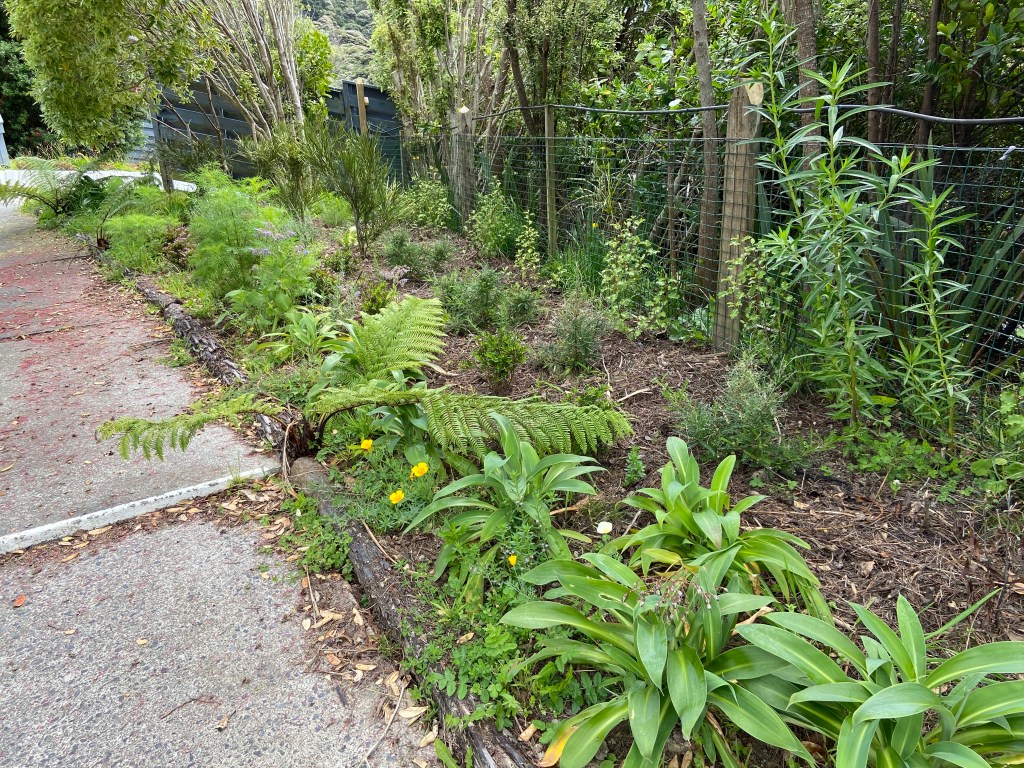
So, I’ve taken a leap onto the street to pilot a planting of flowering native shrubs on our inside berm. I was buoyed up by the response of my immediate neighbours who said it would be exciting, plus the support of our local Porirua Council including Mayor Anita Baker, parks manager Julian Emeny, councillor Josh Trlin and Andrew Jinks at the council’s plant nursery who has amazing knowledge about the best species to suit a site. He kindly drew up a list of shrubs that will provide pollen, nectar and host leaves year-round for native bees, moths and butterflies.. Berm plantings are fine as long as they are not right next to the road, don’t interfere with footpaths, underground services and are low for traffic sight lines.
I began the plating by feeling exposed, perhaps betraying neighbourhood norms around grass. Though, as I plodded on and focused on the work there came a sense that the planting was opening up more than just my contemplation. Blackbirds hopped in close to inspect the digging. Worms were emerging up through the mulch and holes. Bees hummed close by. Specs of moths flitted above at dusk. I met so many lovely people passing by – dog walkers, young mums with babies, couples on evening strolls, school kids walking home. They paused or stopped to say it was looking great, or chat about what I was doing. Some walk past every day to see the garden progress. Our next door neighbour asked me to help create a bee garden for her front lawn too!
I love the idea of continuing that contemplation, slowing life down. Perhaps install a handmade sign and a small seat, invite the street along to a communal cuppa where we share information and stories. Who knows where that might lead…
*Cutting the grass? Cut it out! :Article about Auckland University team research on the benefits of No Mow
**Pollinator Paths and For the Love of Bees: Both these sites are super helpful in providing advice about planting grass berms and public green spaces to support pollinators in urban areas.
 Edge of Things
How inspiring! So many connections across the human and non human worlds as we challenge the ‘lawn’ and ‘shorn’ norms of our colonial past.
Brings to mind these lines from the English Jesuit poet, Gerard Manley Hopkins:
“O let them be left, wildness and wet;
Long live the weeds and the wilderness yet”
LikeLike
Thanks for your comment Pam! Interesting that you mention the colonial echoes. Brings to mind that age old dilemma – who gets to decide what are ‘weeds’ and for whom?
LikeLike
Hey, are you happy to provide the list of plants that they recommended for our area? Whitby-ite here too. Love your work!
LikeLike
Awesome, thanks for your comment Luke! Yes sure I’ll get you the list and send on. Andrew Jinks at the PCC nursery is great to talk with too and the plants there are locally grown and a good price 🙂
LikeLike
Hey Luke, here is the list of native shrubs recommended by PCC plant nursery to plant on our inside berm that will provide year-round nectar and pollen for beneficial native bees, butterflies, moths, beetles and hoverflies. I’ve started out with these plants initially and will add other plants as the site grows. The plants are arranged with the smaller ones at the front to slightly taller ones at the back so as not to block views or pedestrian access.
Front row:
Rengarenga/Arthropodium (Flowers white late spring-early summer, 40-60cm)
Native heather/Cuphea hyssopifolia (Flowers purple Jan-April, 30-40cm)
Behind front row:
Hebe/Veronica diosmifolia (Flowers white/lavender Sept- Oct, bushy shrub 2.5m)
Korokio/Corokia buddleioides (Flowers yellow Oct-Dec, shrub up to 3m)
Centre:
Cook Strait kowhai/Sophora molloyi (flowers yellow between April and Oct, small bush head height) Native broom/Carmichaelia australis (Flowers spring to summer pale purple, shrub ,2.5m)
Back row:
Akiraho/Olearia paniculate (flowers white March-May, small tree)
kōtukutuku, tree fuchsia /Fuchsia excorticata in corners (flowers purple August-Dec, small tree)
Are you thinking of creating a planting for insect pollinators too? Great to know what other Whitby folks are doing.
LikeLike