“If you see torches flashing in the bush this Saturday night, you’ll know it’s just us!” I’d emailed nearby neighbours to let them know a small group of us were going down the Carvel Walkway to discover what nocturnal moth neighbours we might have, attracting them to us with a home-made light trap.
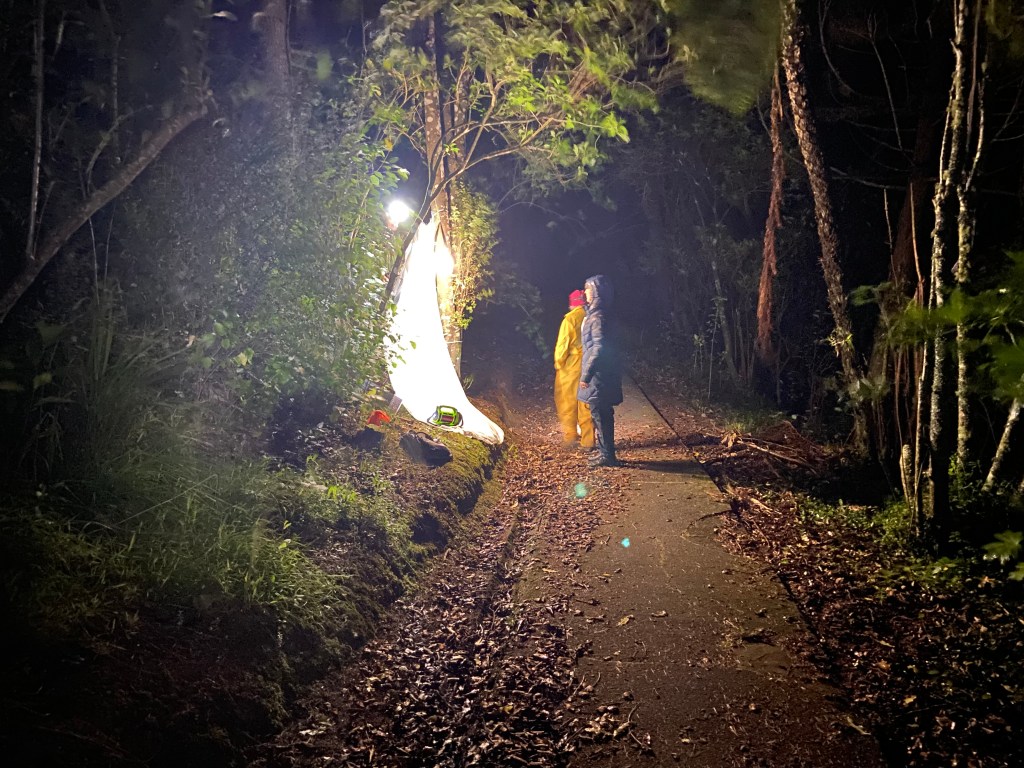
Darkness descended around 8.30pm, our cue to head down to a spot in the bush, just beyond streetlights and glows from home windows. And if anyone was looking from those windows as we walked past they may well have fallen about laughing. Fey had jokingly made us bibs titled moth count supervisor and moth count interns to wear over our rain jackets and over-trousers. And combined with flashing headlights strapped to beanies our rather bizarre looking convoy marched down the road. I really wasn’t sure how this experiment would go.
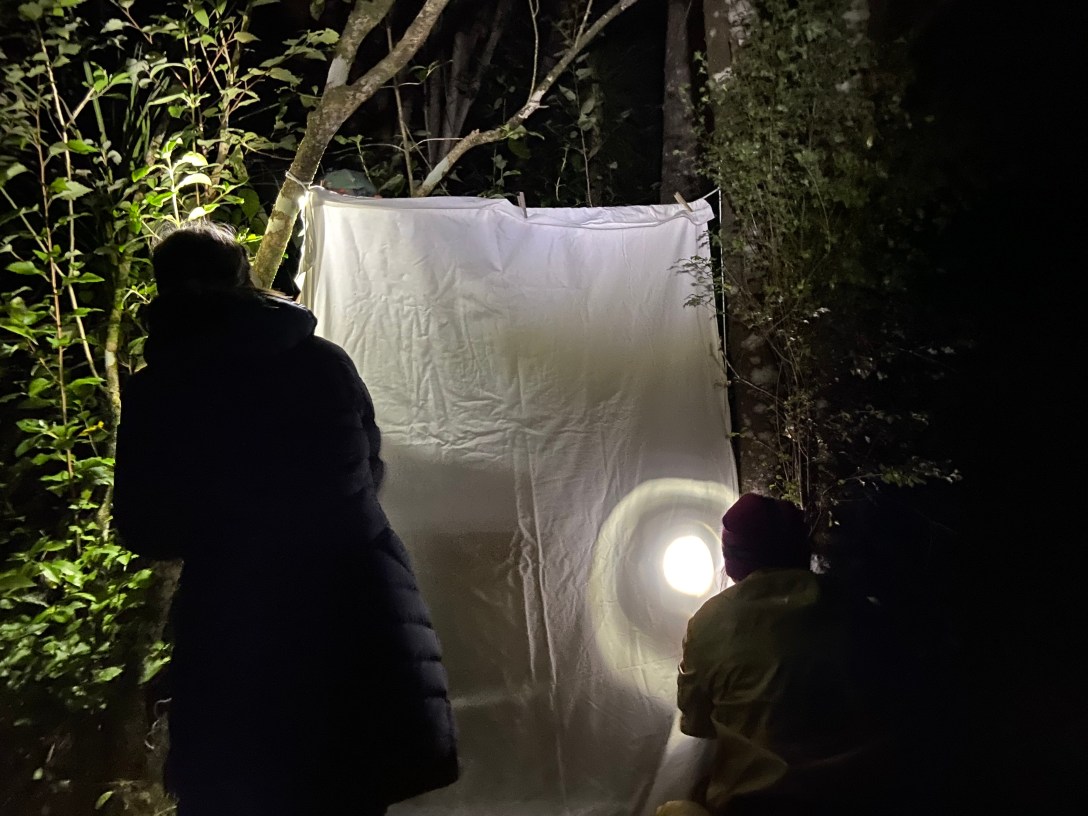
It was the first time any of us had done any light trapping. Luckily a couple of YouTube vidoes had handy tips. We strung a white sheet between two trees, like a washing line, hung a spotlight above it, and shone torches on parts of the sheet. Then waited, and waited.

The conditions were good. No moon or planetary light to attract the moths or compete with our torches and the night was still and warm. It started to spit gently. The only sound the soft bubbling creek in the gully. Eventually Pam sighed and lay down on the earth and leaves and closed her eyes. Like a moth, silently folding into the dark.

At last, some shadows began appear and hover around our head lights. A morepork pierced the air with a haunting screech, so close behind us. A warning maybe? Then delicate sets of wings started fluttering towards the blazing white sheet and landing. Just small brown specks. Inconsequential looking to our naked eyes. But looking closer, under our large magnifying glass and enlarging our photos, these were exquisite and intricately patterned beings, perfectly camouflaged for the gloom. The moths were speckled, striped, zigzagged, soft grey, brown and blonde, or moss green, even indigo and black. Several had attractive snouts and eyes like pin heads, and impossibly thin, fine legs.
I shared their images on iNaturalist and the community on that platform suggested we had found eight different moths (two could be identified but the others remain a mystery, for now) and one of each from the members of ichneumonid wasps, spittlebugs and froghoppers and heleomyzid flies!


Some of the moths we met. Top left: Light brown apple moth, native of Australia but now also lives in New Zealand. Feeds on hundreds of different plants, including bracken fern; Top Right: Eudonia philerga, endemic to NZ and member of moss-eating crambid snout moths. Middle: Anisoplaca achyrota from a family of moths known as twirler or gelechiid moths, endemic to NZ and a good indicator species for mature native forest. Bottom left: Scoparia minusculalis, endemic to NZ and also member of the snout moths, likely feeding from and pollinating manuka; Bottom right: Glaucocharis elaina beloinging to the Crambidae family preferring lowland native forest.
Fey wrote a poem to honour our expedition:
Four head-lit humans in an urban bush reserve
One hanging bedsheet
Five torches
Two phone cameras
Magic in the darkness
We are giants here
Pam lies down and sighs in wonder
Moths come slowly
In ones and twos
Where are you all?
Once windscreens were matted with you
Night light beams like moth soup
Next morning we point and gasp
Enlarged images on the laptop
Camouflage patterns
Delicate wings
Long, fine legs
Chubby bodies
Moths, a wasp, a fly, a bug
Tiny beings of beauty.
 Edge of Things