

The suburb of Whitby, where this journey largely takes place, strides across the lumpy hills overlooking Pauatahanui Inlet. This large estuarine wetland is home to many waterbirds, threatened fish species and plants. Whitby has grown like topsy since it was first established in the 1960s. It raced eastwards with the ever-increasing demand for housing, and now presses up against the freshly opened Transmission Gully motorway.
Some years ago, Pataka Art + Museum held a thought-provoking exhibition about the creation of Porirua titled We Built This City. Early development plans for Whitby were similar to North American new towns, which aimed to relocate populations away from cities and group homes, industry, culture, recreation and shopping into planned communities. I seem to recall that the original aim of creating houses with open and fenceless front yards was to develop community spirit and relationships. These days most of the newer house builds have double garages, that open with remotes, and drivers seamlessly glide into the recesses of homes. It’s fair to say that Whitby, like many suburbs, orientates itself around car culture.
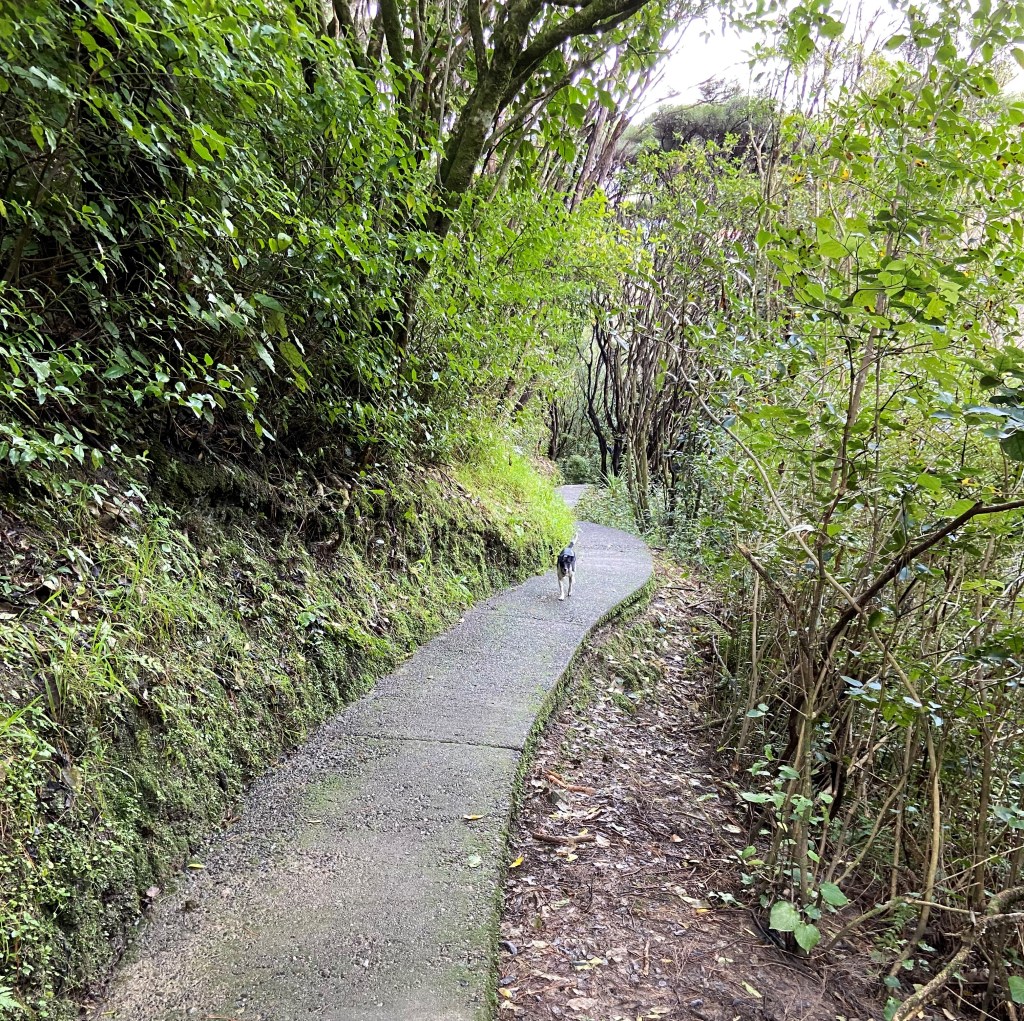
But a wonderful redeeming feature is its planned network of leafy tracks and walkways that meander and tunnel through patches of regenerating bush, and small parks nestled between housing. You can virtually walk from one end of the suburb to the other without stepping onto a road. The pathways were designed for people, for kids to walk safely to schools. As it turns out, they are equally significant habitat corridors for birds and insects which travel through and into backyard gardens, larger bush reserves and the inlet. A stream ecologist once told me that native freshwater fish navigate the waterways along these corridors too. Walking the paths in quiet moments, it’s possible to imagine the forests that once cloaked the area hundreds of years ago. I wonder about the echoes and ghosts of others that have known this place over time, both human and more-than-human.
We’ve lived here only a short time but in those 13 years, as our family grew-up, change to the land has been swift. An example is on our doorstep. When we first moved into the older part of Whitby, our house was all but the last on the road which ended in a deep catchment of mature kanuka and manuka. Looking down you could just make out the sparkle of untouched streams below.
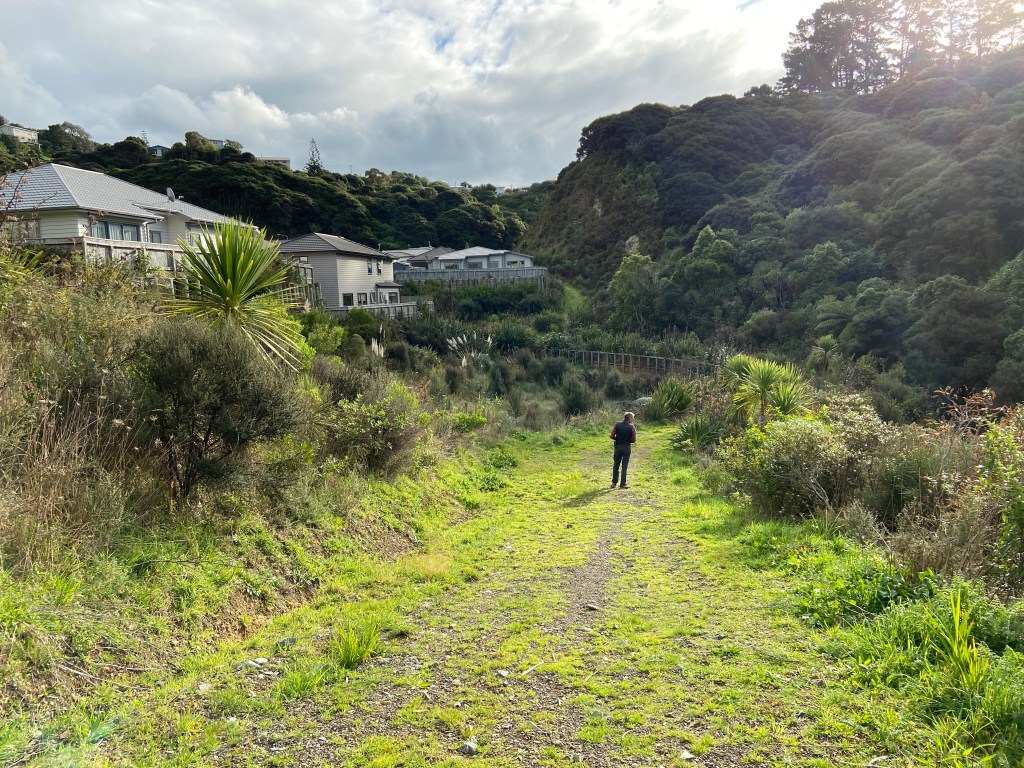
Not long after, we witnessed the infill of the valleys to build hundreds of houses. Hillsides were sliced and bulldozed to level the site. Streams were diverted deep underground to emerge in stormwater ponding areas with ‘scruffy dome’ manhole drains. Such was the engineering feat that you’d never guess now what it once was. A gravel path for maintenance skirts the edges of human dominance, like a shy creature, walled out by fences and planted with flaxes. Alongside it another stream has been lassoed away from homes and into a deep gash where all waters lead to a sluggish wetland sitting beneath a tangle of native and introduced plants. But I’ve seen honeybees, bumblebees, common blue butterflies, and young kereru pass through this place. There are bound to be others I haven’t yet seen – maybe they see me. A sort of rewilding is happening.
Coincidentally, at the time of writing this, I’m reintroduced to the thoughts of ancient Chinese philosopher Lao Tzu by our son who has just bought a copy of the Tao Te Ching. A phrase in one of the chapters is rather interesting, “The spirit of the valley never dies. This is called the mysterious female.”

 Edge of Things