
I think I’m becoming obsessed with the temperature gauge as the weather flip flops between extremes. No sooner has a cold southerly snap arrived than it vanishes, followed by sudden and often intense heat. The other day it climbed to 17C in the shade and, for a time, the sun strike on our deck was 32C. Too hot to sit there! We heard on the radio that Japan had recorded its hottest June temperature ever – 40.2C. But the northern hemisphere is not even into its proper summer yet!
When the air temperature climbs I come across moments of frenzied insect activity on some of my walks. It seems to be the exotic plants they are dipping into such as flowering bottlebrush, dandelions, gorse, lavender, rosemary, buttercups, tree lucerne and nightshade, plus some natives including the odd manuka bush and hebes. What would they forage on in winter if it wasn’t for the introduced plants – some of them considered weeds.
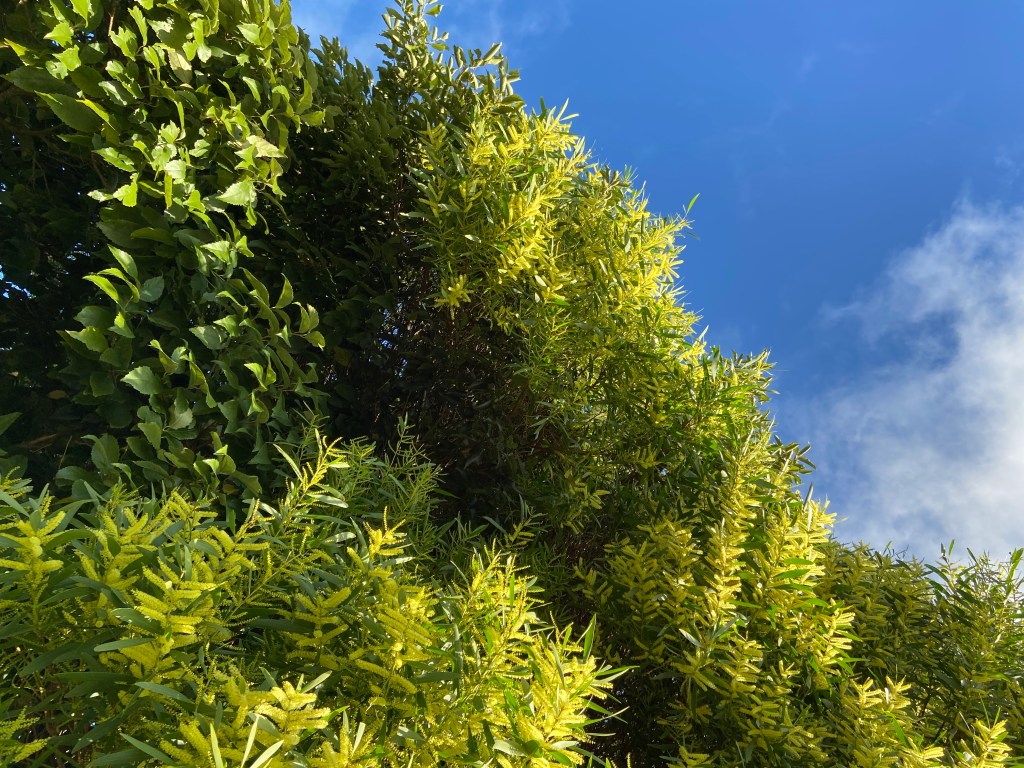
I’ve decided to jack in the car ( just blown a head gasket) and permanently add the 5km round trip to the local supermarket to my walking routine. One less carbon belching trip each week. I feel mildly virtuous. Wandering past Postgate School I hear a chorus of hums above and look up to see honeybees whizzing around what looks to be a huge golden wattle, festooned with yellow, bristle shaped flowers. The Trees for Bees site informs me that wattles are a good source of pollen, and some contribute nectar in winter and early spring.
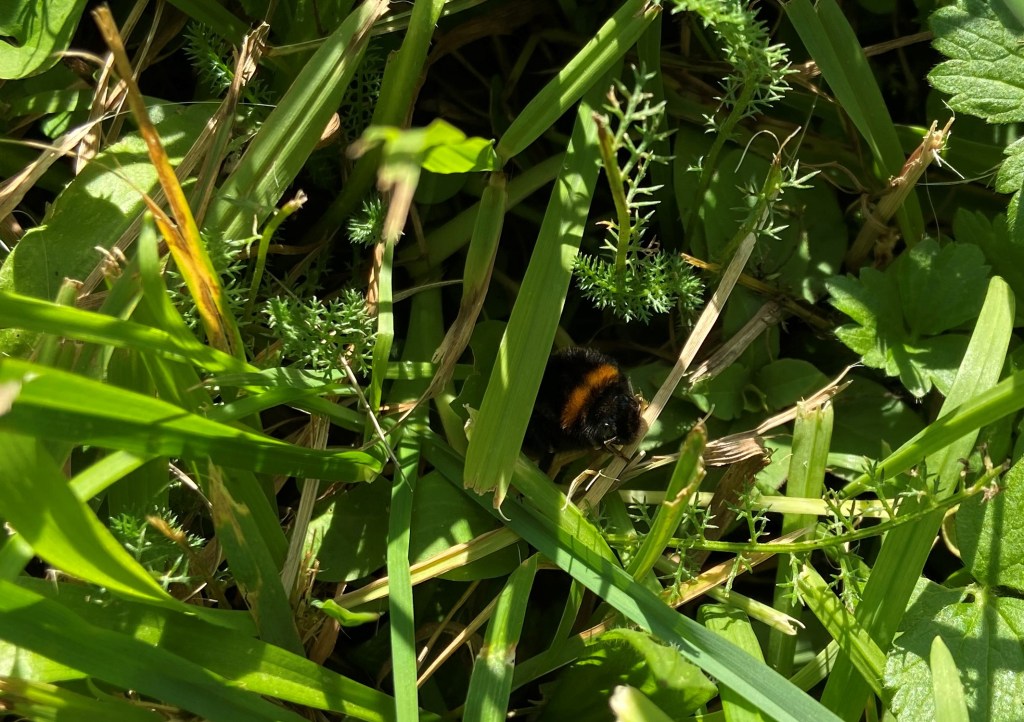
Further on, at Solander Place, I accidentally disturb a bumblebee resting in the sun, while several monarch butterflies flutter over the warm grassy stream bank near the tennis court. Others rest on flowering tree lucerne and straggly looking buddleia. I read that tree lucerne is a giant tree broom from the windswept Canary Islands in the Atlantic Ocean. It grows fast here and flowers in late winter when there are few other nectar sources around. I gather that these monarchs are apparently overwintering adults. They are mostly inactive in the cold but on warm days they come out to bask and feed. I’ve witnessed a couple of swarms recently in still patches of sunlight, on or near large gum trees. It’s a spell binding sight as they dance, float and shimmer.
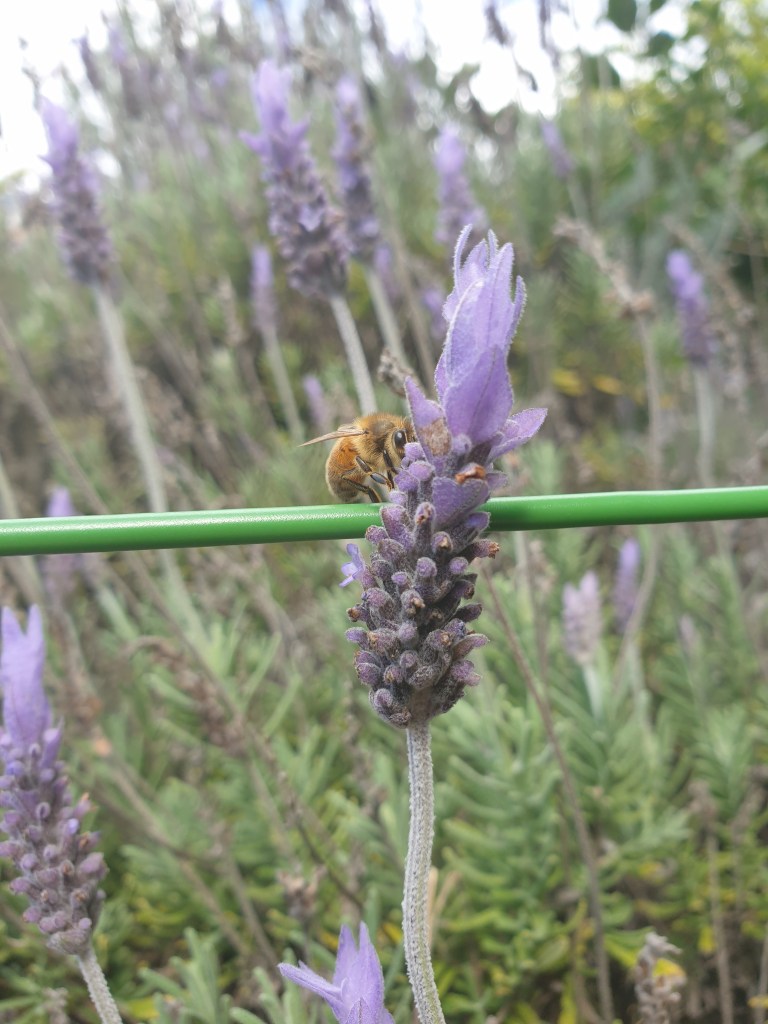
Another warm spell and I race to hang the washing out. A few honeybees zoom past my ears on a direct path to tiny purple flowers of a lavender bush. Perhaps these are a few workers out for a short visit before heading back to their hive to keep the queen warm over winter. Leaning in close to each flower head I smell a warm delicate fragrance in each of the heads in the sun. I put the temperature gauge next to them – it’s nearly 23C. If I hang my clothes in certain places, it blocks the sunlight from the flowers and I feel guilty – the bees seem so desperate. In that moment their need seems greater than mine, so I remove the rest of the clothes to dry elsewhere.
I take the temperature gauge to dandelions sprouting on our lawn, which I’ve left to go wild as an experiment. By the flowers it’s 24C but the earth under my bare feet is damp and ice cold. I spot what looks like several honeybee drones except they are larger and only have two wings, not four. These are drone flies, belonging to the hoverfly family. They are, apparently, great pollinators. I must find out more. They work methodically, probing their tongues into the large yellow heads of the dandelions, washing mouthparts and front legs, and bobbing their abdomens. They seem more relaxed characters than the honeybees and are not too worried when I come close.
 Edge of Things
Rescued a monarch from our back section after last week’s stormy weather. I put her in a glass container with some vegetation to rest on. I did a bit of research and gave her some sugar water, Waited a few days then released her back outside on the next sunny day. Here’s hoping.
LikeLiked by 1 person
Thanks for the comments and tips for monarchs. With these massive rains, winds and cold temperatures we’ve been experiencing lately I also wonder how and where some of the monarchs survive!
LikeLike